

- Can’t see laser lines on daylight?
- Method 1 – Use a receiver.
- Method 2 – Use a laser reflector card.
- Method 3 – Use an object with a reflective surface to make the laser beam visible.
- Method 4 – Use laser recognition glasses.
- Method 5 – Mark it with a laser dot.
- Method 6 – Scan with your phone.
- Method 7 – Use reflective tape.
Last updated on March 23, 2026 2:23 am
Can’t see laser lines on daylight?
Aaron Barnett of BangingToolbox recommends: Using a laser level outdoors in daylight can be a challenge.
To start, laser beams are less bright than sunlight and become more visible on reflective surfaces like my bald head.
Next, staring directly at these rays of light is harmful to the eyes.
Whether you are a DIYer or a chippy, you will come across a job needing to use a laser level in daylight frequently.
If you use laser levels with red beams, you know that green lasers are brighter and easier to see in scorching daylight.
For me, I like to shoot construction-related heights with a laser level early in the morning or in the evening before and after the sun is out.
However, if you need to do it in the day, keep reading to find out how I do it! Go to Method 2 and 3.

Method 1 – Use a receiver.
A digital receiver is your laser level’s partner, and maybe he has one or not? When working outdoors, especially in the daylight, a receiver will help.
The receiver works by detecting signals emitted by laser level without having to see the line.
When the receiver detects the signal, the tool will convert it to an audible tone.
Some laser levels can display the actual height of the signal. Some receivers have volume controls.
Using the receiver is easy.
- Attach your receiver to a measuring staff or rod and place it in your desired spot to detect the laser-level beam (You can just use a piece of wood). Turn it on and ensure that it faces the laser-level direction.
- Turn your laser level on points in the direction of the receiver.
- Adjust the receiver up and down until it picks up the signal. It should show an audible or visible dot signifying that it has picked up the laser beam when you have moved it to the correct height. If the building site has loud noise in the background, adjust the volume controls.
- Take note of the height measurement or position on the rod.

Some laser levels come with a receiver. If not, remember that a receiver from a different manufacturer may not be compatible.
So, it may not read the signal from the other manufacturer’s laser level accurately.
Otherwise, you can test this in a room where you can see the laser level at the same time.

Method 2 – Use a laser reflector card.
You can use specialized laser reflector cards to see laser lines emitted in broad daylight. These cards have reflective surfaces that enable laser beams to be seen in daylight.
To see a red laser level in daylight, use a red reflector plate; to find a green laser in sunlight, instead use a green reflector plate.
Reflective surfaces allow laser light to create a brighter spot on a surface than non-reflective materials. Most laser cards have holes, so you can screw them to an area.
- Place your card on the spot you are aiming for.
- Let it face your laser level.
- Turn your laser level on.
- Adjust the card’s position as necessary.
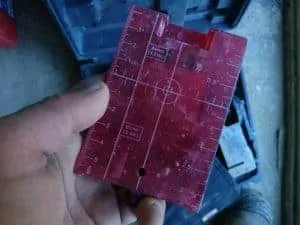
Here is my laser-level reflector card.
Method 3 – Use an object with a reflective surface to make the laser beam visible.
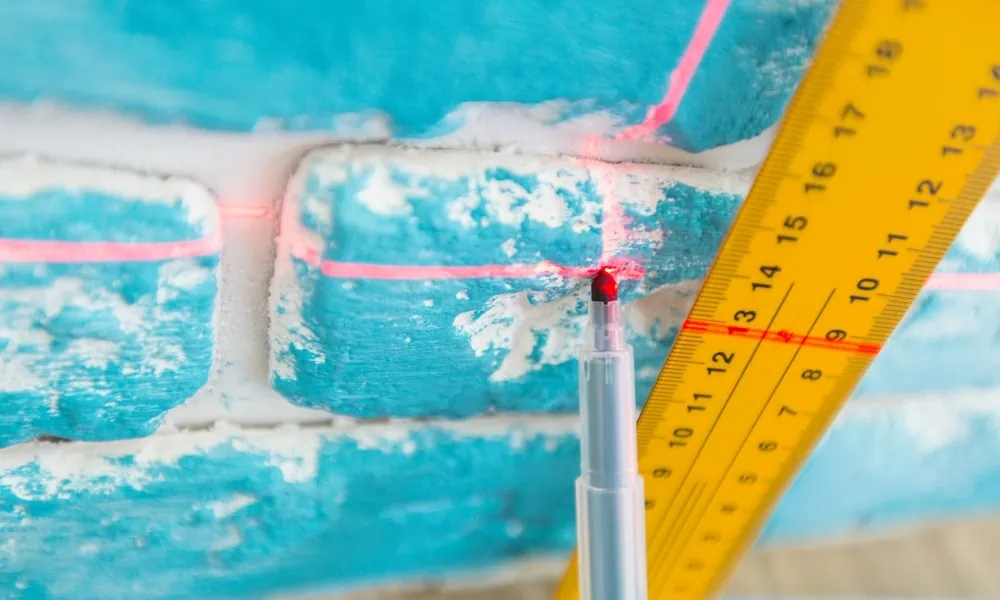
When I need to find a faded laser line in daylight without a reflector plate on hand, I use the shiny metal part on the hinge of my folding ruler to find the beam, or I use the metal on my carpentry chisel.
This method does it if you don’t have a receiver, but you have objects around the site with reflective surfaces.
Objects with reflective surfaces can show the beam better in daylight. These objects may include a metal pipe, beam, ruler, or L-square metal ruler.
However, remember that the beams may bounce in different directions and cause harm to others.
Place the metal object onto the surface you want to point the laser beam at. Turn your laser level on and point it toward the metal object. You should now see the laser beam on the metal or reflective surface more easily.

Method 4 – Use laser recognition glasses.
Laser recognition glasses are eyewear that help makes laser beams more visible in daylight.
This eyewear uses specialty lenses that filter harmful ambient light and brightens up the laser beam.
But be cautious when getting one because it has requirements [1] to be considered safe.
Using one is straightforward. Just wear the glasses and look for the spot you are working on.
Although this method may not be as effective as other methods, you can try incorporating these specialty glasses with a reflector. Both often come included with a new laser level.

Method 5 – Mark it with a laser dot.
You can use the laser dot feature and mark it as a reference point instead of using the full laser beam function. The laser dot can be projected on most carpenters’ laser levels as a level projection. The dot produces a more concentrated reference point that helps track the laser beam, whether horizontal or vertical, from about 15 to 20 meters.
Turn your laser dot on and aim it at the position you want to mark as a reference point. Turn your laser level on and aim for the end of the beam on the dot. Adjust the laser level as necessary until it meets the dot.
This method should be an easy way to make the laser beam visible.
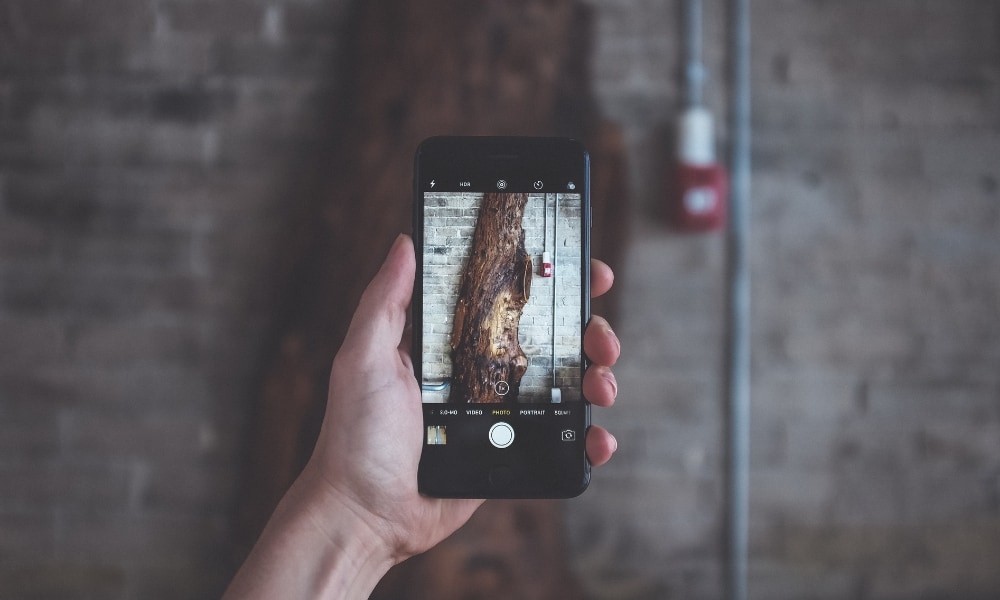
Method 6 – Scan with your phone.
Using your phone is a simple hack that you can use to find the laser dot from your laser level. This method allows you to use your phone camera and use it as a scanner, much like how you use a receiver.
You only have to turn on your phone’s front camera and try to pick up where the beam should pass. The beam hits the camera and waits until its brightness illuminates at its peak. Start marking on the center opposite the camera.
But remember, trying to let the laser strike through your camera may damage it.
Method 7 – Use reflective tape.
Reflective tape is the simplest object that can help us see laser beams emitted by laser levels.
You only have to stick it on the surface you want to point a laser line to. When the beam touches the tape, it will bounce back, producing a more visible line on the surface.
Final Thoughts
Although seeing a laser beam line in daylight is more challenging than in the dark, it is not impossible.
When you do not have a receiver, you can make leveling tasks possible by being resourceful, as discussed.
Do not forget to wear eye protection when dealing with lasers. Even high-end laser-level brands may not emit enough bright lines during bright daylight hours outdoors.
If you are still having trouble seeing laser beams in the daylight, try adjusting the brightness of your laser level if there is a brightness feature.
If you’re inside a room, try dimming it a bit if you have the option to save battery life.
Browse through our recommended bright green laser levels to avoid all the hustle.
More information:
- Laser safety glasses published by https://www.rp-photonics.com/laser_safety_glasses.html


