
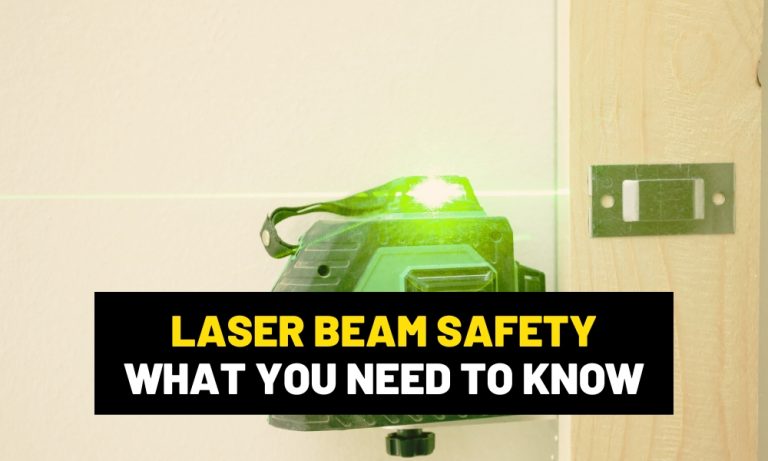
Last updated on October 6, 2023 7:17 am
Working with laser levels frequently?
Aaron Barnett of BangingToolbox suggests: Working with laser-dependent tools like laser levels means possible exposure to the beam.
While the world continues to enjoy the benefits of laser technology, we have made steps such as documenting standards for releasing and handling laser products.
Now the problem lies on site, where the workers have direct access to and usage of the products.
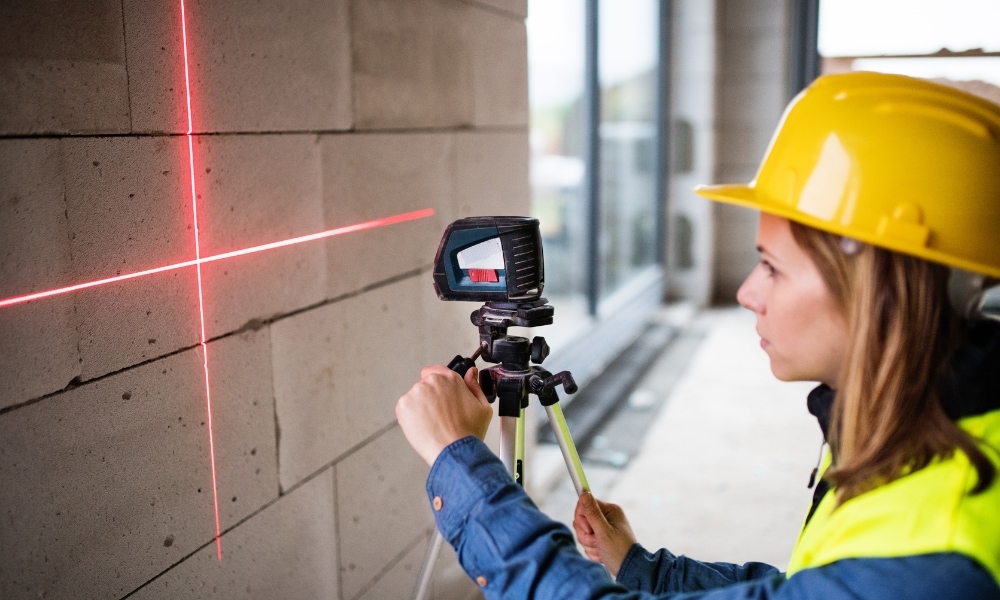
Whether you are a contractor, a designer, an engineer, a plumber, a surveyor, or any worker frequently handling laser levels or measuring tools, you must know how to use the laser beams safely.

Are the beams in laser levels safe for the eyes?
No. However, most laser levels are still considered to be within acceptable tolerance levels and are manageable at work.
Although the laser beams on your line laser level are not strong, each dot or line can be intense enough to damage your eyes.
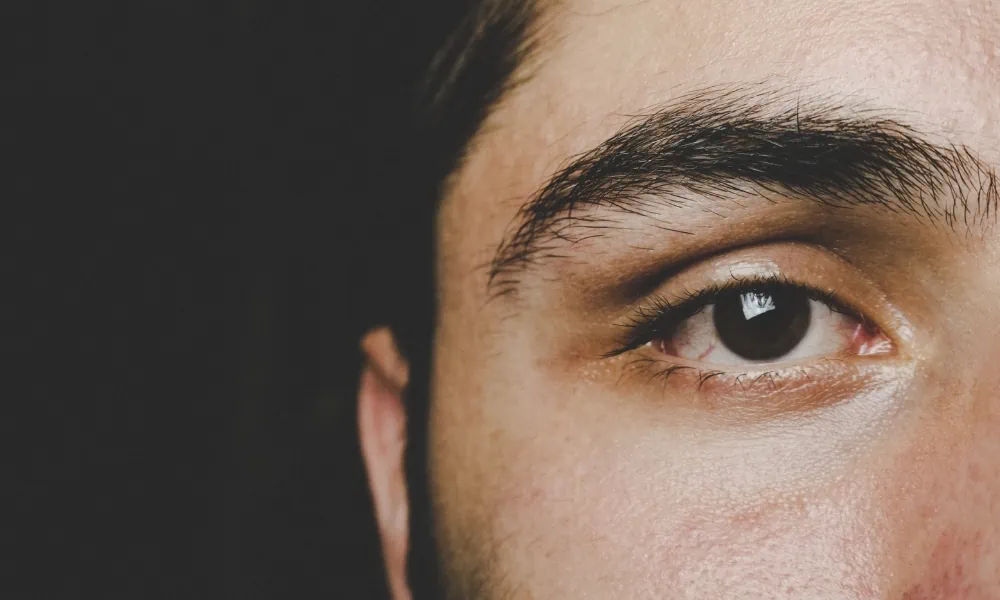
Focusing on the beam, even under 5mw of power, can cause injury to your lens, cornea, and retina.
Laser light within visible to near-infrared spectrum, about 400 – 1400 nanometers, can already cause critical damage to the retina.
The retina cannot repair the tissues affected by the lesions made by focusing on narrowing laser beams. And the least you want to be affected in the retina is the macula and fovea [1].
On the other hand, laser light within the far-infrared or ultraviolet (180 nm to 400 nm) spectrum can damage or injure the lens or cornea.
Photophobia, red eyes, tearing, stromal haze, and discharge are just a few of the harmful effects of ultraviolet laser light.
Meanwhile, the laser light within the far infrared spectrum could cause thermal damage and cornea transparency loss.
But it doesn’t mean you’ll get any injuries as soon as you get hold of your laser level. Most laser levels have safe to low power output. However, high-ends may have moderate power.
Our eyes can handle them with our innate reflexes. For example, the eyes blink at the touch of light.
But even if your laser level beam is weak enough and the eyes have their defense mechanism, or even when you are leveling outdoors, looking deliberately on a low-powered laser beam for ten seconds can harm the eyes. Dont look directly at the laser.

Laser Level Classifications
To understand your leveling tool better, let us discuss the different laser light classifications. For your reference, the power output of the laser beam is measured in milliwatts (mW).
Under 1mw is considered safe. While going over 5mw needs careful handling by avoiding focus or direct exposure to the laser beam, most laser levels fall between 1 and 5 mW.
Class I
Class I laser products have low power and are considered safe.
These products should not cause eye or skin damage because they are under 0.4 mW.
Examples of these laser products are retail store scanners, laser printers, or CD players.
Class II & IIa
Class II & IIa products are low-powered but can potentially cause eye damage if directly focused on the beams.
The power output is under 1mw.
Although the beam is weak, you should still avoid direct contact with the eyes.
Good thing the eyes blink, which should be enough to protect mistake eye contact.
However, focusing on the beam continuously is enough to damage the eyes.
If you see laser products with Class IIa, know that staring directly at the beam for three minutes within 8 hours or more will cause an eye injury, which you must avoid.
Class IIIR and IIIB
Most high-end laser levels fall under Class IIIR, including red and green beams.
High-end laser pointers and laser range finders are also between 1 to 5 mw. And they are considered to have intermediate power output.
You’ll find it on the labels of the products, “Avoid direct eye exposure.” Staring at the beam for a few seconds will cause eye injury.
One instance here is the case of the 11-year-old girl [2] who played with a laser pointer with a power output of 5mw for about 10 seconds. She had reduced vision and developed a central scotoma in her right eye.
For IIIB products, products are labeled, “Avoid exposure to the beam.”
This is because Class IIIB has power outputs between 5 and 500 mW. This classification is considered moderately powered and harmful but can be operated with proper handling.
Class IV
Class IV lasers are extremely harmful in any condition. They are high-powered lasers with an output of 500 mW.
Class IV products are often used for surgery, cutting, drilling, micromachining, and welding.

How to handle line lasers safely on the job site?
Don’t worry. Most laser levels are manageable.
With careful maintenance and a little know-how, you can work with laser-level beams safely.
- No matter what your laser tool is, do not stare closely at a laser beam.
- Tinted glasses will not protect your eyes. Instead, use a pair of laser safety glasses.
- Never point laser beams at anyone, especially on moving vehicles or aircraft. They can cause a distraction while driving.
- Use a tripod to keep the beam stable at a target.
- Do not point a laser beam at any flammable materials.
- Do not try to disassemble or repair your laser level.
- Keep laser measures and laser levels out of pet’s or children’s reach.
- Purchase a laser level with classifications only required for your job.
- Make it a habit to check your laser level for signs of damage and malfunction.
- You must be trained and knowledgeable of the tool before operating.
- Make it a habit to turn the tool off when not in use.
- Keep the tool away from water.
- Take the battery off if you will store the tool for an extended time.


Now that you know how to handle laser levels
You can avoid the hazards posed by the beams. Laser levels, although low to intermediate power, can still cause eye and skin damage if you are not careful.
With proper handling, the effects of the beams can be safely manageable in your workplace.
Dont look directly into the beam, if you notice your eyes blink as a reflex from accidental exposure, look away immediately and re-position yourself to protect yourself from prolonged exposure.
All it takes are proper information and training, plus a safe and reliable laser level. Find your building tech here.

More information:
- Laser Safety Program: Biological Effects of Laser Radiation published in https://blink.ucsd.edu/safety/radiation/lasers/effects.html#
- Assessment of Alleged Retinal Laser Injuries a study published by https://jamanetwork.com/journals/jamaophthalmology/fullarticle/416518


