

Last updated on March 23, 2024 11:56 pm
Hammers are among the earliest and most known hand tools.
Aaron Barnett of BangingToolbox suggests: Essentially a striking or impact tool, hammers do a great job at driving nails and rods into other materials such as wood and concrete to function as fasteners.
Over time, hammers have adapted to take on other jobs too, such as demolition work and nail removal.
This guide shows all the different types of hammers and their uses, plus will highlight key information such as main attributes, applications, and manufacturers.
So if you’re wondering how many types there are, surprisingly, there are fifty.

How hammers were made?
The original hammer existed 3.3 million years ago [1] and was nothing more than a large, smooth stone used to hit against other smaller objects to make other tools.
Fast forward to 30,000 B.C., the stone was now tied to a wooden or bone handle via leather or vine, leading to the modern appearance of today’s hammers. When man learned to make tools using metal, the familiar appearance of the modern hammer began to take shape.
It was not until the 1500s when steel was discovered, and the use and manufacturing of hammers truly evolved into what they are right now.
Types of hammers and their uses
1. Claw hammer
A standard hammer common to most carpenters and used for general purposes. Ideal for driving and pulling nails from objects and surfaces. Claw hammers are characterized by their weighted front head and “clawed” back end.
Some of the best-known manufacturers of these hammers are Estwing, Stanley, and Irwin Tools.

Framing hammers are essentially clawed hammers but are a few inches longer and a little heavier and provides you better leverage.
These common hammers have a milled face and a claw end and are best used for heavy carpentry work.
Top manufacturers include Stiletto, Douglas Tools, and some Estwing hammers as well.

3. Brick hammer
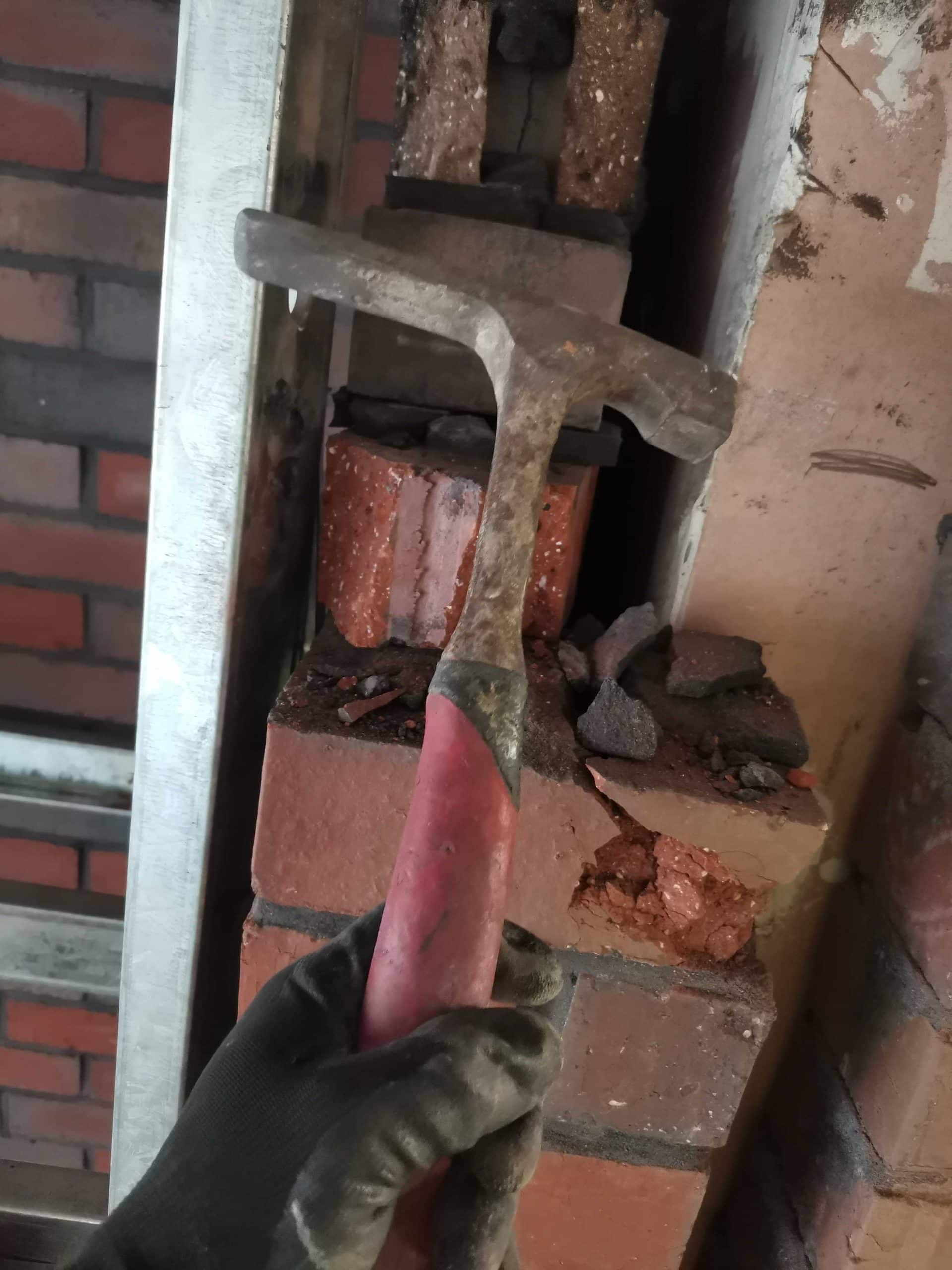
The stonemason’s hammer is a brick hammer with a flat, squared striking head on one end with a chisel-like blade on the other end.
Brick hammers are specialty hammers that are used to cut or shape concrete and stone materials.
Known manufacturers of masonry hammers are Estwing, Eficere, and Grey Pneumatic.
4. Welder’s hammer
Another tool called chipping hammers, these hammers are used to chip away welding slags.
These are specialty hammers that look like small, blunt pickaxes with spring handles and are manufactured well by Hobart and Pitbull.

5. Soft-face hammer
A soft-face hammer or mallet is a rounded hammer that’s meant to offer a driving force without fear of damaging surfaces.
The hammers are standard hammers that most homeowners and repairmen use due to their ability to reduce forces transmitted back to the arm.
Good names include Estwing and Toptul.

6. Drywall hammer
Another tool called for plasterboard hammer, these specialty hammers are specifically designed for use in either putting up or taking down drywall.
Drywall hammers often have a serrated, milled face and a hatchet-shaped back for doing rough cuts. Ox Tools, Vaughan, and Goldblatt are known for quality drywall hammers.

7. Electrician’s hammer
These hammers look very similar to common carpentry hammers but have distinct differences that allow them to be used for electrical applications.
These specialty hammers have the same striking head and claw attributes, but an added rubberized and electrically insulated fiberglass handle.
Klein Tools and Stiletto are good with these hammers.

8. Tack hammer
Also called an upholstery hammer, these small, common hammers that look like slightly rounded pickaxes are used to install ‘tacks’ or small nails into furniture frames.
The tack hammer usually boasts a magnetized head to assist in setting tacks. C.S. Osborne and Gearwrench manufacture quality tack hammers.

9. Sledgehammer
These are the original heavyweight hammers. A sledgehammer is basically a large, two-handed hammer with a heavy, flat head that’s used for heavy-duty applications including construction and demolition.
These hammers are designed to deliver great amounts of force by using momentum. Top sledgehammer makers include Wilton, Fiskar, and Craftsman.

10. Lineman’s hammer
A lineman’s hammer is a heavy hammer that’s used to knock around solid and heavy objects.
These specialty hammers often have a head designed that’s meant to focus weight on the striking side, with a lighter and usually pointed back end.
Top manufacturers include the likes of Klein Tools and J. Harlen.

11. Bushing hammer
A bush hammer is another masonry tool that’s meant to texturize concrete and similar materials.
These specialty hammers usually have flat, rectangular heads with small pyramid-shaped points protruding at each end; similar in appearance to a kitchen mallet for tenderizing.
Among good manufacturers are Bon and Solid Tools.

12. Blacksmith’s hammer
Another name for forging hammers, the balcksmith’s hammer are most commonly used by blacksmiths and blade-smiths in forging either blades or other components used for manufacturing.
These hammers usually feature tempered peens and striking faces that are suitable for work with high temperatures. Top manufacturers include Stanley and Anvil.

13. Ball peen hammer
Referred to as the machinist’s hammer, these specialty hammers are a type of peening hammer primarily used in metalworking, specifically in machining metal parts and components.
Ball peen hammers usually have a flat, circular face and a rounded back end. Good ball peen hammers are made by Wilton and Pittsburgh.

14. Chasing hammer
Chasing hammers are small hammers mainly used for working jewelry.
These specialty hammers have a head design similar to a ball-peen hammer with a smooth, slightly convex flat ‘chasing’ head and a rounded back end.
Top manufacturers of chasing hammers include Fretz and PMC Supplies.

15. Mechanic’s hammer
A specialized hammer used by mechanics usually when working on car paneling. A body mechanics hammer is often paired with a small curved anvil, called a dolly, to remove dents and do detail repairs.
Top manufacturers include the names of Fairmount and Mechanic’s Time Savers.

16. Toolmaker’s hammer
Toolmaker hammers are specialized striking hammers that are often used for more accurate spot-punching.
These hammers are often smaller when compared to most other types and look like a wrench, with a small magnifying glass usually built into its head. Starret is known to make really good toolmaker hammers.

17. Prospector’s hammer
Known as the geologist’s hammer or rock pick, the prospector’s hammer often small, pick-looking specialty hammers are mainly used for prospecting.
That is for carefully and accurately chipping away small bits of rock and dirt.
These hammers are surprisingly versatile as they can lightly pry wood. Vaughan and Estwing really rock at making rock picks.

18. Tinner’s hammer
A tinner’s hammer or setting hammer is a staple hammer in any metal shop.
Having been used for over the last 100 years, these specialty hammers look like blunt tomahawks and are great for use with rivets, ducts, and fittings.
Vaughan and Malco Products shine with these hammers.

19. Rail-road spike maul hammer
Simply called the spike maul, these long, two-handed types of sledgehammers are primarily used to drive railroad spikes.
With double-faced hardened steel heads that give it the appearance of a fattened T-bar handle, these things are designed to not break under huge force. Wilton Tools is known to make excellent spike mauls.

20. Dead blow hammer
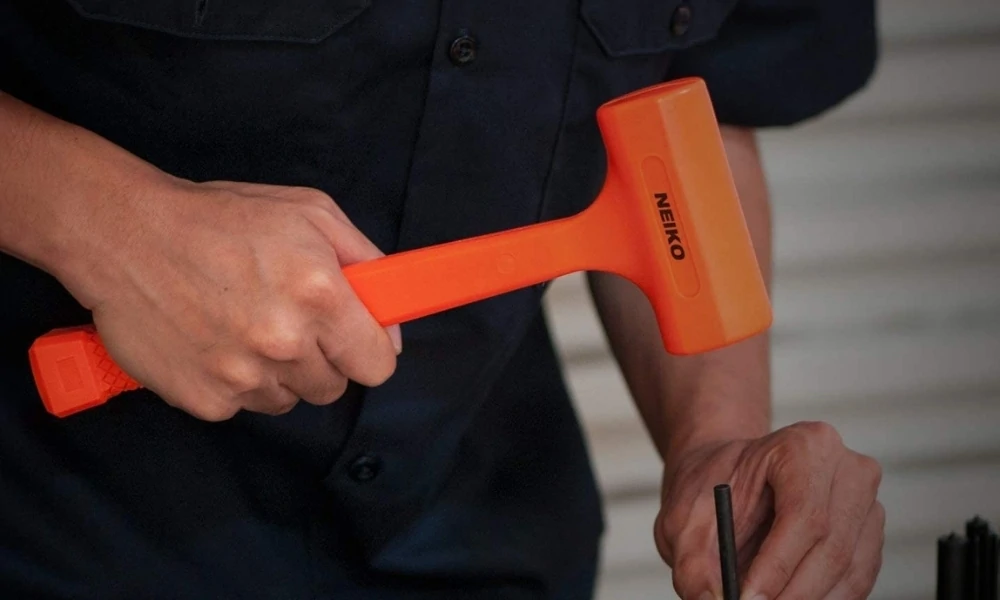
A dead blow hammer is a specialized mallet that’s designed for even less surface damage when striking with great force.
Dead blows have the standard appearance of mallets and look like they’re made of plastic. They’re great for precision maintenance work and are duly made by names like Neiko, ABN Tools, and Tekton.
21. Stone sledgehammer
These are among one of the different types of sledge hammers that are more suited to work with stone.
In appearance, it doesn’t really differ much from regular sledgehammers, apart from its head with only one striking face and the other being a big stone pick.
Kapriol is known to make good stone sledges.

22. Trim hammer
These hammers are specialized claw hammers with smooth face and are light enough to drive trim nails and reduce the risk of damaging trimmings when striking.
Trim hammers are smaller and appear straighter than the standard claw hammers. A name that immediately pops up when looking for these is Dalluge.

23. Blacksmith’s sledgehammer
These are basically sledge-heads that were adapted to be used for blacksmithing.
A blacksmith sledge can be a single-handed 4-pound hammer or the longer, two-handed 8-pound variant for bigger forge projects.
These types of forging hammers sport heavy and tempered heads resistant to heat. Stanley makes some smoking sledgehammers.

24. Half-hatchet hammer
Another term for a carpenter’s hatchet is the half-hatchet hammers, which are traditional tools that combine the cutting and prying ability of hatchets with the striking capability of hammers.
They sport mostly a hatchet’s appearance, with a rounded striking head at the back. Estwing and Plumb make good half-hatchets.

25. Piton hammer
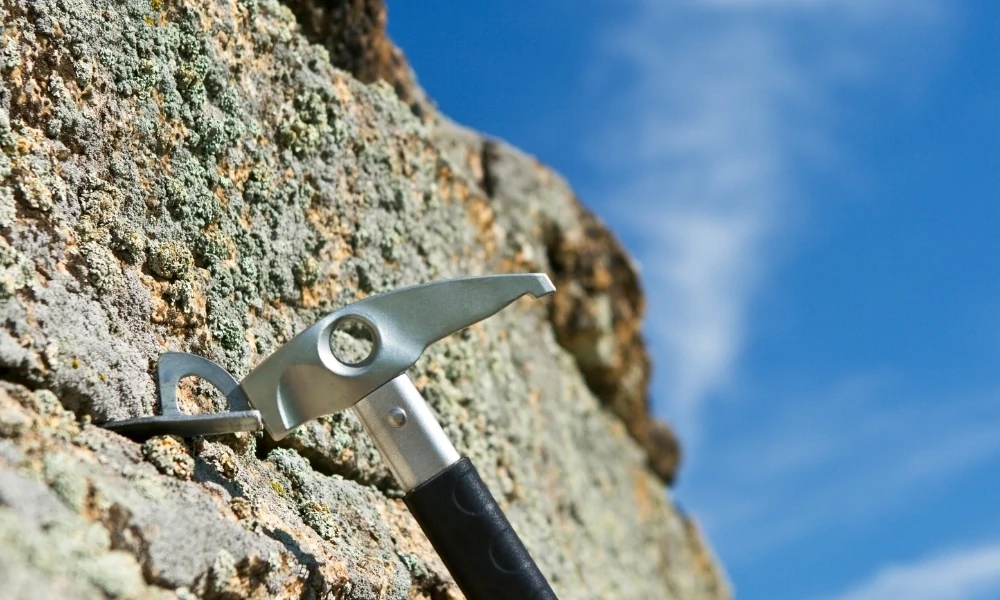
These stand out on the list as these hammers have very specific uses. Piton hammers are very special and are exclusively used for driving or checking the integrity of pitons – mountain climbing pegs.
Piton hammers are often small and lightweight. Black Diamond, Petzl, and AustriAlpin are known for their quality pitons.
26. Scaling hammer
Scaling hammers are mostly used in forges and/or welding shops. Similar in function to a chipping hammer, these specialty hammers are used to chip welds, scale, rust, and paint from unhardened metal.
These hammers should not be used outside these applications. Look to USA Tools and Toku for quality scaling hammers, with the latter offering pneumatic versions.

27. Scutch hammer
These specialty hammers are mainly used in masonry to dress, clean, and even shape bricks.
Scutch hammers come in double-scutch versions with comb slots at both ends or single-scutch where one of the ends is a squared-out striking face.
Faithfull is a well-known brand when it comes to scutch hammers.

28. Club hammer
The club hammer is sometimes called a lump hammer. These are essentially small sledgehammers that are mainly used for light demolition work.
These heavy-headed hammers can come with either curved or flat heads and can be used to cut when combined with a chisel. Known makers of club hammers are ABM Tools and Ox.

29. Gavel hammer
Paired with a sound block, you most likely would have seen these special mallets in courtrooms where the judge uses them to call attention.
Gavels are typically made of hardwood, are duly varnished, and sport regal yet simple designs. One of the known manufacturers and sellers of Gavels online is ZhongXin Arts & Crafts.

30. Brass hammer
Brass hammers are special mallets that are designed mainly for metalworking applications and are recommended to be used over steel hammers.
Like all mallets, brass hammers deliver sufficient driving force while minimizing damage to the work surface. Look no further than Tekton and Bastex if you need a beautiful brass hammer.

31. Rubber mallet
These are essentially mallets with completely rubberized heads and are useful for applications where you want to eliminate impact marks.
Rubber mallet heads are softer than standard mallet heads and while they still provide enough weight and force, they are best used for lighter applications. RS Pro is a well-known maker of quality rubber mallets.

32. Blocking hammer
A blocking hammer is a secondary forging hammer with a flat, square head on one side and a cylindrical one on the other.
This specialty type of blacksmith hammer is used to shape metal into blocks or to flatten pieces. The brand Faithfull again shines on making these hammers.

33. Cross peen hammer
Armed with a horizontally-aligned wedge-like pein, this special blacksmith hammer is used for starting panel pins or tacks without the risk of you hitting your fingers.
Alternatively, the weighted head is heavy enough on one side to be able to shape metal. Known manufacturers include Stanley and Anvil Brand.

34. Cross peen pin hammer
Contrary to the standard cross peen, this lighter variation isn’t ideal for use in metalwork but does perform considerably well for light woodwork such as cabinet and furniture making.
Its head is sleeker compared to regular cross peens, with narrower peens. For these hammers, we have Bahco and Silverline.

35. Planishing hammer
Perhaps the 1st power-hammer here, planishing hammers are used to ‘planish’ or flatten, polish, or smoothen metals that were already formed by other means.
Planishing hammers work with faster, lighter strikes as opposed to manual heavy strikes. ProLine is said to make excellent planishing hammers.

36. Engineering hammer
These hammers are types of ball-peen hammers that are usually heavier and have double-rounded heads, though some variants do sport only a single rounded head with a cross peen.
Engineering hammers can be used for both demolitions and industrial repair. A known maker of engineering hammers is Facom.

37. Rip hammer
A rip hammer is an ideal tool for prying nails and even ripping apart fastened wood. Rip hammers are straight-claw hammers because their claws are not curved.
Their heavier weight means that you can leverage more force to remove even deeply embedded nails. DeWalt and Stanley offer you bang-for-your-buck hammers here.

38. Boiler scaling hammer
These are more specialized scaling hammers that are used specifically to remove deposits and scale from metalwork. It’s not a hammer with the usual striking face, but instead contains a head grounded into vertical and horizontal chisel-shapes, making it ideal for scraping.
Faithfull again is known for making quality boiler scaling hammers.

39. Shingle hammer
Called as roofing hammer, the shingle hammers feature a square head, spike, and claw mounted on the side of the head for nail removal.
The spike is used to create pre-nailed holes into fragile slates and shingles. Some known manufacturers include AJC and Lathe.

40. Slater’s hammer
A slater’s hammer is a specialty hammer that usually consists of a claw for drawing nails, a shear for cutting edges, and a hole-punching spike.
The slater’s hammer is ideal for use with metal roofing and slates. S Stortz is known to make quality slater hammers.

41. Splitting maul hammer
Splitting mauls are essentially huge sledgehammers with a pointed axe head that alone weighs 6 – 8 pounds.
With longer handles and a dull blade edge, these tools are mainly used to split wood through the use of sheer force. Makers of the best splitting mauls are Fiskars, Helko, and Wilton.

42. Rock climbing hammer
Similar to the piton hammer in terms of specialized use, these are otherwise called wall hammers or aid hammers as they assist in rock climbing and when scaling cliffs and/or mountain edges.
Over the piton hammer, the sharp ends of these hammers are more suited to repositioning loose anchors. Black Diamond is a renowned maker of these hammers.

43. Knife-edged hammer
Knife-edged hammers are the closest you get to axes. These cutting hammers have a bladed edge on one end with a small striking square on the other.
Mainly used in woodworking, the bladed edge is used to split wood, while the flat end is used to bludgeon it. AB Gardax is one of the few known quality makers of this hammer type.

44. Straight-peen hammer
Essentially, these are heavier cross-peen hammers with only vertically aligned peens. A straight peen primarily functions as a metal shaper, making it very good for blacksmithing, but can be used to start nails.
Bon RiverWorks is known to make professional-grade straight peen hammers.

45. Copper and hide hammer
These are essentially soft-faced hammers much like the brass hammer – they minimize striking damage and noise via their shock-absorbent properties and general malleability.
These are a safer alternative to striking machined surfaces. A known manufacturer of these is Thor Hammer.

46. Lath hammer
A lath hammer is often used along with a drywall hammer as these mainly manipulate thin strips of wood to make the foundations of a plaster wall.
Similar in appearance to half-hatchets, the notched axe head helps in wood splitting and nail removal, while the traditional hammer face offers decent striking. Peddinghaus and Gedore are good lath hammer makers.

47. Hammer and chain
Sometimes called a break glass hammer, this tool combines from a hammer and chain.
It is used for breaking fire extinguishers and is very useful for emergencies.

48. Wooden mallet
A wooden mallet is probably the lightest striking tool on this list. You can easily make this one by shaving a wooden block down to the right size.
Wooden mallets are used commonly in carpentry and woodworking projects. It is used for putting wood blocks together and for carving with chisels. The best makers are Godhammer, Crown Tools, and Weichuan.

49. War hammer
A war hammer is used as a weapon instead of a construction tool but thought I would add it to the list. This ancient weapon features a regular hammerhead and a straight or curved spiked head. It comes with a long handle and it’s sometimes called an iron hammer.
You’ll probably see this hammer in war-themed movies.

50. Thor’s hammer
The ultimate hammer; the hammer of hammers; Thor’s hammer, Mjolnir, is both ornate and powerful.
Looking like a jumbo-enlarged sledgehammer head on a leather-strapped handle, this runic weapon belonging to the god of thunder is not only fully resistant to all elements but helpful enough for some insane striking – some hammer materials on Earth are very hard and dense.
But when compared to a hammer made within the core of a dying star, well, you get the picture. Not sure if other tool manufacturers have had a go at this, but one solid maker of Thor’s hammer is none other than the legendary comic studio Marvel.

Can you remember them all?
Who knew that there were so many ways in which you could hit and bash things, right? Hammers are and will continue to be one of the most basic yet essential tools to man.
No toolkit and no profession that involves any form of building or construction are complete without a hammer; these robust and surprisingly versatile tools are industry staples and are near-constant in both professional and DIY applications.
With a vast catalog, you pick which hammer, or hammers would suit you best given the nature and demands of your projects.
All types of hammers, on their own, are great but combined with other tools and they become even more awesome!
We’ll see you at the next one. It’s hammer time!
More information:
- Hammerstone: The simplest and oldest stone tool, published in https://www.thoughtco.com/hammerstone-simplest-and-oldest-stone-tool-171237


