

Last updated on March 24, 2026 12:05 am
Working from heights safely
According to Aaron Barnett of BangingToolbox: If there’s any hazard you can get from working on elevated areas, it would be the height itself. Elevated spaces are fall hazards and one of the most dangerous aspects of the building site.
And it takes only a few seconds to turn your work routine into an injury or fatality.
For any tradie who works frequently at elevated work heights, these areas are considered second homes.
Although most injuries from falls happen to DIYérs without proper education and protocols, tradies with years of expertise working at heights are not exempted from work-related accidents such as falling.
It takes only a single mistake, negligence, or missed preventive measure to put any worker into an accident.
According to the US Bureau of Labor Statistics, around 300 to 400 workers died from falls, trips, and slip in private construction setting from 2018 to 2021 [1].
And in 2022/2023, falls from heights account for two-thirds of workplace fatalities [2].
For this reason, laborers should undergo safety training, and employers must provide them with the required training for their positions. In this article, we will discuss the safety measures for working at heights in a commercial setting.

How high is considered working at heights?
Working at heights are jobs done in areas with any falling risks. But at which point do you need fall protection equipment? Why is working at height considered hazardous?
OSHA requires workplaces to provide fall protection systems at an elevated height [3]:
- 4 feet for general industrial work areas
- 6 feet for construction work
- 5 feet for shipyards
- 8 feet for long shoring and marine terminals
Hazards encountered when working at heights
Working on elevated areas is not only prone to falling. Skilled workers are also exposed to different hazards when working at height.
- Structural failure. Workers may encounter structural failure on elevated structures such as rusted scaffolding.
- Electrical hazards. Working at height may expose workers to electrical wirings or power lines. Electrocution from power equipment could also be the cause of a fall.
- Weather-related hazards. Workers may deal with other hazards like strong winds, rain, or ice while working at heights in the wrong conditions.
For these reasons, workers should not be complacent when working at heights. They have to be careful even if they have been doing it for years.
Fall arrest systems
Fall arrest systems are a precaution if other safety measures are not in place yet. For example, if someone is installing handrails on a highrise or trimming the top of a tree, they would need to use a fall arrest system.
Every workplace should not only equip workers at threatening heights with fall arrest systems when needed but adequate training and qualifications are also required.
Fall arrest systems arrest workers in the event of an accidental fall.
A fall arrest system has three main components: the body support (harness), the anchor point, and a lanyard or lifeline.
The fall arrest system holds the body through the harness attached to a lanyard. The lanyard is then connected to an anchor holding the lanyard and the entire weight of the user.

In the event of a fall, the lanyard deploys, allowing the person to fall downward at a controlled rate.
A fall arrest with shock absorption dissipates the energy generated during the fall, slowing down the fall gradually.
Because of these risks, anyone who will work at heights has to train on the safe use of fall protection systems and how to apply them according to your worksite’s fall protection plan.
Careful implementation of the fall protection plan reduces the risk of workers suffering injuries and suspension trauma brought by prolonged hanging on fall arrest systems.
Prolonged hanging from a fall arrest system can quickly cut blood circulation and can become life-threatening quickly.
A fall protection plan means other trained workers are there to assist in getting a worker quickly out of the harness if a worker falls. And are able to assist with first aid and contacting emergency services.

What is Fall Distance?
As a general rule, you need a personal fall arrest system if you are working on a 10-foot platform.
However, you must understand the concept of fall distance when choosing a lanyard. Provide a clearance for deployment, your height, and lanyard length.
For equipment with a shock absorber, you must allot space for shock absorber length.
Summing it up together, you get the fall distance. For this reason, you need a lanyard that will cover fall distance correctly.

Anchor point
The anchor point is the connection between the lanyards or lifelines and the anchors that hold the worker’s weight through stable support like a roof or beams.
You can mount anchor points temporarily or permanently on concrete or stable surfaces that can hold the load. Before using a type of anchor, you need to know its load-bearing capacity to avoid failure in the event of a fall.
Houses built with solar panels should have permanent anchor points installed so that anyone who cleans the solar panels or does maintenance can connect a fall arrest system.

What is suspension trauma?
While fall arrest systems are especially helpful for workers who have fallen from a life-threatening height, using them comes with a risk.
The fallen worker can suffer from suspension trauma or orthostatic shock if not rescued in time.
The harness used on the legs could prevent blood circulation. In turn, the heartbeat and oxygen supply in the brain drops.

In these cases, the team must rescue the fallen worker in under five or ten minutes.
Fallen workers could die if not rescued for 10 to 40 minutes after falling and hanging for too long.
For this reason, a worker should have adequate training in using fall arrest systems, and more importantly, the team around him or her needs to also be trained on rescue.
The training should cover how to move their feet to prevent cutting off blood circulation. Workers need training to assist fallen co-workers in the event of falling.

PPE Required
Personal Protective Equipment (PPE) is a requirement when working at heights, especially in industrial settings.
Aside from the fall arrest system, there are also other PPEs you must use when working at heights.

Hard hats
Employers must equip their workers at height with head protection, especially when their jobs are prone to impacts.
The elevated area is a space exposing workers to hazards such as falling tools, debris, and working materials.
Workers can bump into overheard structures, beams, or equipment. If the job involves demolition and renovation, the worker is susceptible to falling materials.
Safety Goggles
The eyes are extra sensitive to many jobs at elevated workspaces.
Aside from falling debris, materials, and tools, workers must protect their eyes from wind and airborne particles, tool sparks from cutting and welding, fumes, and other hazards.

Hand protection
For a demanding setting such as construction work, the hands undergo constant abuse due to tool handling and hard labor with timber and concrete.
Safety gloves are an efficient barrier for protecting hands from various hazards that can hurt the hands, along with a vaseline barrier.
There are different types and materials for gloves, and each one gives a specific type of protection. Depending on the type, safety gloves will protect the user from:
- Abrasions or small cuts
- Tool and equipment handling
- Falling objects
- Hot and cold surfaces, materials, or tools
- Chemicals
- Rope handling and climbing
- Electrical work
- Gloves can help a worker hold onto something in the event of a slip.
Tip: Make sure your gloves are tight-fitting and not a size too big.

Non-slip steel-toed boots
The safety shoes have a toe cap made of steel that protects the feet from impacts and compression.
The soles are made of rubber or rubber compound with tread patterns, channels, or lugs that create traction and help prevent slipping on wet, oily, and uneven surfaces.
In an elevated setting, suitable footwear will prevent slipping on roofs and ladders and protect the toes from falling materials, tools, and equipment.
In some cases, different shoes have a better grip on metal roofs than your standard construction footwear.

Safety Clothing
Anyone working at height must wear their respective safety suits as their first line of defense.
Depending on your line of work, safety clothing may be made of fire, heat, or chemical-resistant fabrics.
Cold-weather suits use insulated fabrics to provide warmth to their users.
High-visibility vests are made from polyester or polyester-cotton and reflective materials so that other workers and heavy machine operators can see you.

Rescue equipment
Rescue equipment is a strong requirement for working at height. It is crucial to have first aid equipment on hand for prompt response in emergencies.
From our assessment of random building sites, some only have first aid kits available in the site office (That is sometimes locked).
More organized building sites scatter first aid kits at every RCD outlet, Lift, and floor-level entrance.
Also, OSHA mandates companies with a workforce on elevated heights to have the equipment ready in case of suspension, injuries, or distress.
Rescue equipment such as rescue lanyards, harnesses, descenders and ascenders, rope and cable, first aid medical kit, rescue kit, trained personnel, and communication devices are needed onsite.

RCD
RCD cut off the power instantly in case of an electrical short. An electrical short could result in electrocution and a fall.
When using corded power tools, there is a high risk of cutting or damaging the power cord.
RCDs are always essential to help avoid electrocution.
Additionally, when working at heights, opt for cordless power tools that dont have a lead that could get tangled, tripped on, or cut.

AED
The Automated External Defibrillator (AED) is an essential medical equipment for workers at height.
This area exposes workers to various hazards like heat and fall hazards, which can trigger cardiac arrest.
In emergency cases, you must find the nearest defibrillator for:
- Sudden cardiac arrest
- Rescue and preparedness
- Safety regulations compliance

This device is so helpful when time is of the essence.
With built-in electrodes, the device can detect and analyze the heart’s rhythms.
Even non-trained personnel can operate this because it provides voice instruction on delivering shocks as needed or how to perform CPR.
When AED is available at the workplace, it increases the survival of workers suffering from cardiac arrest.

Hand or guard rails
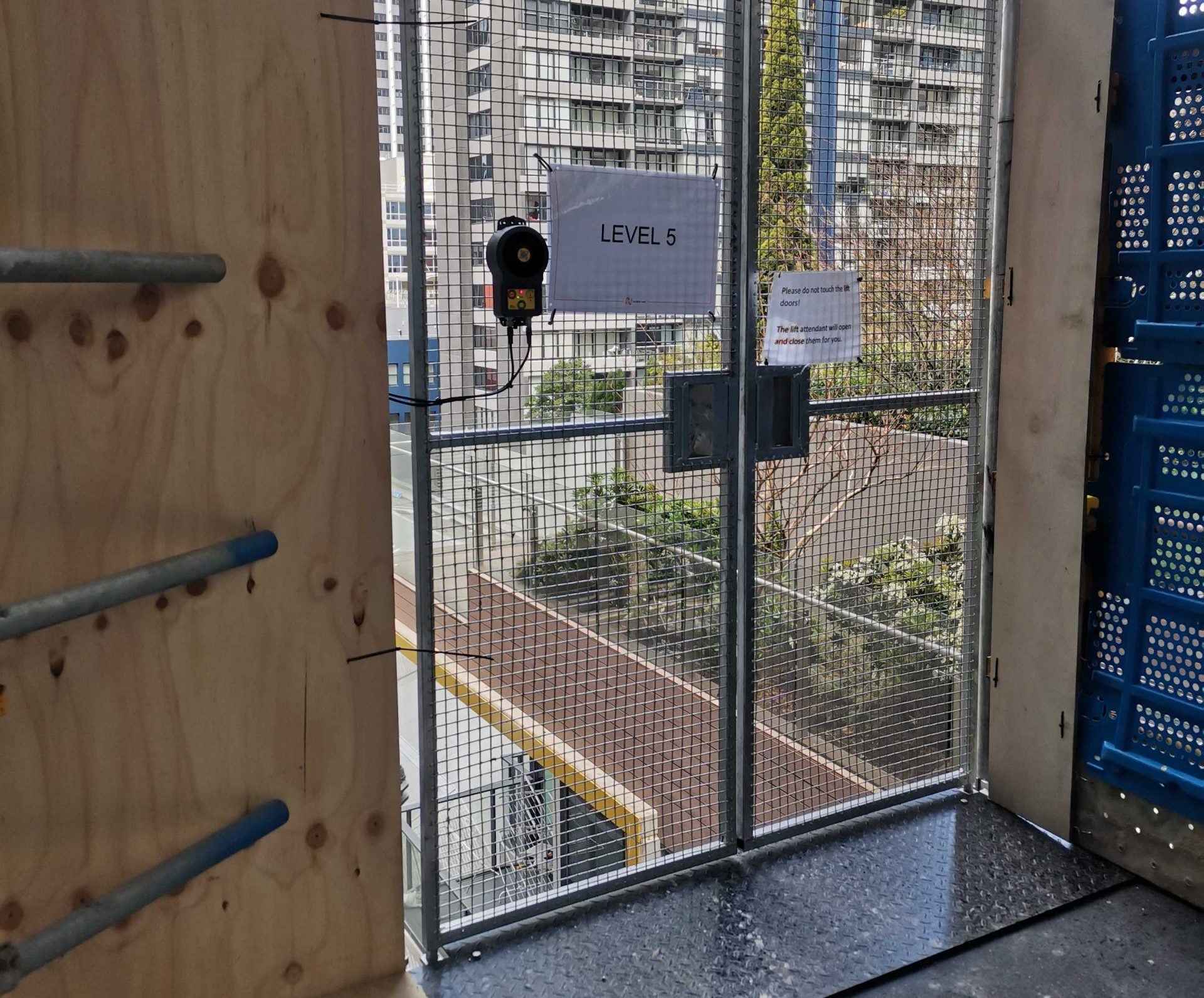
Railings and handrails are integral safety protocols for not just working at height but also protecting any areas that could be a fall hazard.
Barriers serve as fall-prevention measures, so workers stay only in their working area and cannot fall.
Guard rails provide workers peace of mind and minimize the risks of falling.
Guard rails can be in different forms but are mostly made from steel, aluminum, or composite materials. Lift shafts and empty stairwells can be covered with sheets of plywood.
Safety nets
Safety nets are a passive form of fall protection equipment used to reduce the risk of falling tools and materials on workers or pedestrians below.
The nets catch loose building debris and prevent materials from blowing and hitting the ground or blowing down the street.

Safety Ramps
Access ramps or loading ramps are inclined temporary pathways used to access elevated floors or levels.
You can build ramps in construction or industrial settings at access ways.
In construction settings, this pathway provides access to moving equipment, heavy materials and supplies, and machinery.
Using safety ramps eliminates the need for ladders or stairs. It streamlines the movement of equipment and supplies from one level to another.
For floors or levels unpassable by freight equipment, it will need safety ramps.

Ladders
The ladder is a crucial piece of equipment when working at heights. A lot of accidents and fatalities happen from ladders.
According to the Bureau of Labor Statistics, there were 161 deaths and 22,710 injuries caused by falls on ladders [4].
Despite this number, ladders are necessities in construction work but should always be replaced by a scaffold if work is going to be longer than 1 minute.
Many building sites have banned step ladders and have a mandatory policy for platform ladders only.
Good thing engineers are continuously designing safety equipment for industrial construction settings.
There are three main types of ladder used in construction: the portable, mobile ladder, and built-in ladder.

Portable ladders are easy to carry. They can be self-supporting or non-self-supporting. For construction, ladders with steps or platforms are safer. Ensure you use them on stable and even surfaces.
Mobile ladders have wheels for transporting the ladder from one place to another.
This type of ladder is mostly found in timber yards or factories.
These ladders have a locking mechanism for the wheels and safety rails that you can hold on to while you step into the ladder until you reach the top.
Built-in permanent ladders are attached to the wall, making them stable. Most of these ladders are slip-resistant and prevent corrosion.
They are generally used in exterior walls in industrial facilities such as telecommunications or wind turbines. But they are only used for access not for working from.
It is always safer to use portable scaffolding than ladders.

Scaffolding and tempory access to heights
Scaffolding erected on construction sites provides safe access to workers on multiple levels of elevated heights.
These platforms are helpful for workers to move around on elevated heights with peace of mind. It contains scaffolding planks, handrails, kickboards, and interlocking metal tubes to erect a solid framing structure.
Scaffolding on construction sites must be erected by a qualified scaffolder to ensure compliance.
Qualified builders can erect a mobile scaffold or build a timber scaffold at low heights as long as they use rated and approved scaffold planks, kickboards, braces, and handrails.
Here are the guidelines for the use of scaffolding [5]:
- Use a fall arrest system when the scaffolding is over 10 ft.
- Full use and coverage with rated and approved scaffolding planks
- The scaffold must carry the load four times the maximum capacity.
- A trained worker should inspect the scaffold at the start of every shift.
- Only a qualified scaffolder should bridge the walkways of two scaffolding or alter any scaffolding.
Here’s when a worker should not use a scaffold.
- When the platform has been covered with ice or snow
- When the weather is bad
- When the tag at the bottom isn’t approved for use.

Aerial lifts
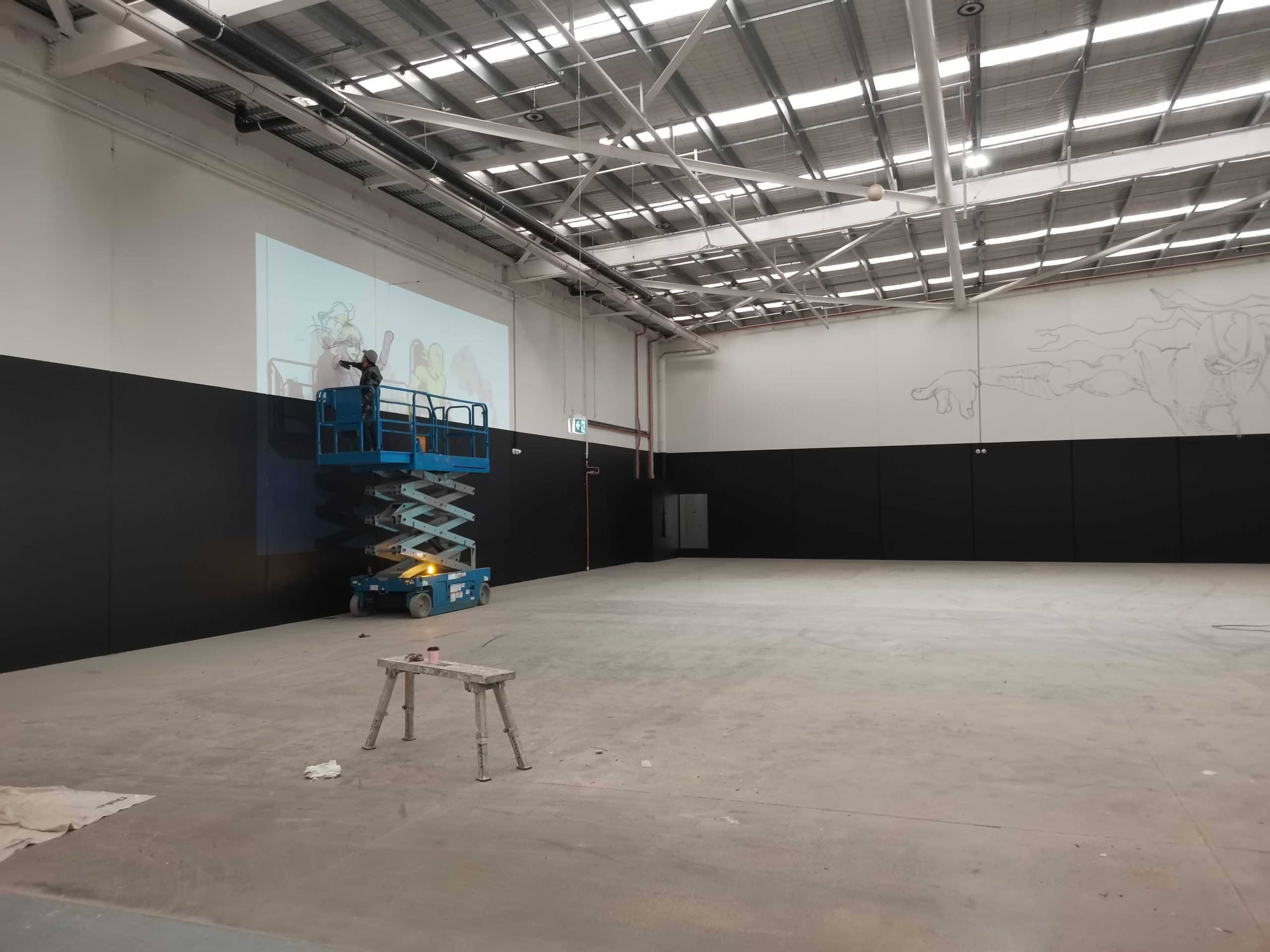
Using aerial lifts allows a more controlled way of accessing heights. This heavy equipment is an articulating platform that extends to a certain height level, operated by another person.
The lifts may come equipped with handrails, harnesses, and stability systems. The platform is enclosed, ensuring the worker is contained in a safe space while working.
Lifts are efficient because workers are raised to a precise height and position, eliminating the need for ladders and gaining access to higher levels.
Aside from this, motorized lifts also reduce the risk of physical strains and musculoskeletal injuries caused by climbing.
- Scissor lift
- Boom lifts
- Cherry pickers

Safety Training is a Must!
For an industry that requires constant access and working from heights, employers must comply with the standards set by OSHA or their related official safety guidelines.
Aside from training, employers should ensure to have a fall protection plan.
They should continuously orient and educate their workers on the importance of safety when working at heights.
Safety training also equips workers with the right way to operate and use the safety equipment above.
Employers must employ the use of appropriate safety equipment, provide a healthy working environment, and provide peace of mind to their workers working at height.
Key working from height rules.
- Always prioritize a motorized working platform like a scissor lift.
- Next, prioritize a mobile scaffold.
- Always have adequate platform width, braces, double handrails, and kickguards installed.
- For jobs less than 1 minute, use a platform ladder.
- Use a work platform instead of a step ladder or a bucket.
- For dangerous work at heights, you need trained workers to use a fall arrest system.
- All power tools need to be cordless or connected to an RCD.


More information:
- Construction deaths due to falls, slips, and trips report published by https://www.bls.gov/opub/ted/2023/construction-deaths-due-to-falls-slips-and-trips-increased-5-9-percent-in-2021.htm
- Wor-related fatal injuries in Great Britain published by https://www.hse.gov.uk/statistics/pdf/fatalinjuries.pdf
- Fall protection standards published by https://www.osha.gov/fall-protection
- Fatal injuries from ladders down in 2020 report by https://www.bls.gov/opub/ted/2022/fatal-injuries-from-ladders-down-in-2020-nonfatal-ladder-injuries-were-essentially-unchanged.htm
- Safety and Health Regulations for Construction Scaffolds standards published by https://www.osha.gov/laws-regs/regulations/standardnumber/1926/1926.451


