

Last updated on March 23, 2026 8:09 am
Differences between air and electric nibblers?
According to Aaron Barnett of BangingToolbox: Choosing between an air vs. electric nibbler is more than a choice of a power source.
For professionals that already own air compressors, adding a pneumatic nibbler to your tools may not be a question. But for some people who are just starting to collect their tools, making the decision could be confusing.
Both tools are efficient in their own way, and each has unique advantages and disadvantages.
If you already own an air compressor and still weigh between the two, you can start with your line of work and choose from there.
See, there are many factors to consider when selecting between these two tools of the same function.
To help you weigh things out, we made a comprehensive guide you can refer to as you only need one or the other.

What is an air nibbler?
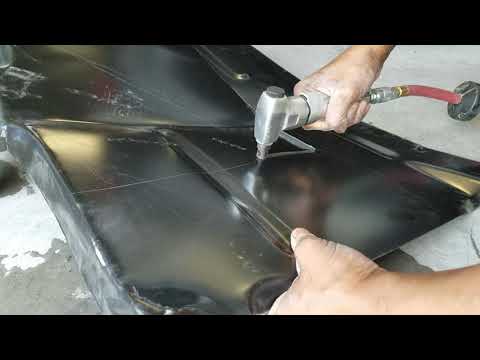
An air nibbler works on a pneumatic motor that relies on power supplied by compressed air.
When the pneumatic motor activates, it drives the gears that enforce the vertical up-and-down motion of the punch-and-die mechanism.

Advantages
- Extremely powerful
- Lightweight
- Durable design
- No risks of motor burnout
- Small and easy to hold and maneuver
Disadvantages
- Always need an air compressor connected to a hose
- Air pressure can cause inconsistent cutting power
- Loud
- Limited mobility
What is an electric nibbler?
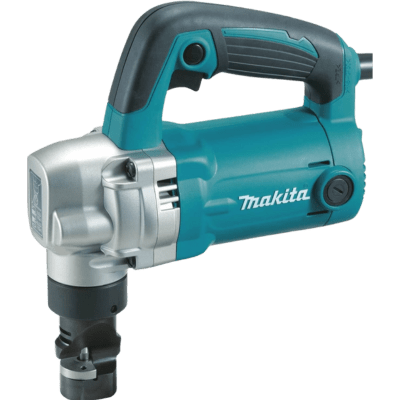
An electric nibbler is a handheld nibbling tool driven by electricity.
When supplied with electricity, it activates the motor that drives the gear train connected to the punch-and-die system.
Electricity is the main driving force for the punch and die to create an upward and downward shearing action against metal sheets.
Advantages
- More portable and convenient
- Quieter
- Excellent for thinner metal sheets
- Consistent cutting power with no drop in air pressure
Disadvantages
- Less power than an air nibbler
- Heavier
Power
The power measurement of an electric nibbler is in watts (W) or amps (A), while the pressure of an air nibbler’s pressure is cubic feet per minute (cfm).
You can say that a nibbler is powerful when it cuts through thicker metals more quicker.
In our database, the Makita JN1601 works on 16 GA at 5amp while Ingersol Rand 325 cuts 18 GA with air flowing at 17cfm.
In general, air nibblers are stronger because compressed air powers up the tool and produces high pressure.
Compressed air can generate more power and torque compared to an electric nibbler.
But with the casual cutting of sheet metals, the air nibbler’s strength could be overpowering.
You don’t have to rely on energy alone to execute efficient cutting. The metal sheet could deform or bend from too much power.
You have to take into account your nibbler’s cutting capacity, design, and condition to balance power and efficiency.
But for heavy-duty applications, you will need an extra powerful nibbler. We’ve seen nibblers from Fein Tools cutting 6 GA extra thick metal. And it is not air-powered.

Cutting Capacity
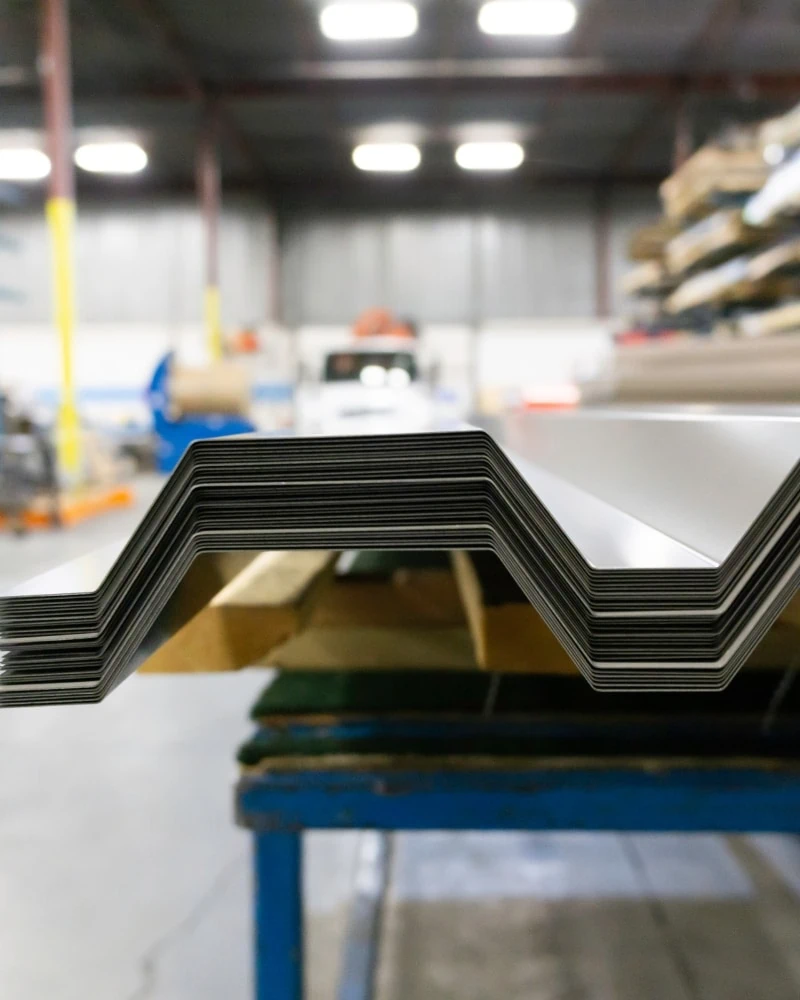
A nibbler’s cutting capacity depends on the model. Most air and electric nibblers can cut up to 18 GA. Some electric nibblers have a maximum capacity capability of 16 GA.
In our database, air nibblers can cut up to 18 GA and Electric nibblers can cut 10 to 18 GA depending on the tool’s manufacturer.
Also, a nibbler’s cutting capacity depends on other factors, such as the material, the thickness of the material, the nibbler type, and the condition of the punch and die.
But between electric and air nibblers, air-powered nibblers have more versatility when it comes to cutting capacity as they can cut thicker materials.
Although, some electric nibblers can cut thicker metals of 10 GA, like the Makita JN3201.
The cutting capacity all boils down to the material you will cut and your exact nibbling tool. To understand more about cutting capacity, check our guide.
Weight
Air tools usually weigh less than electric nibblers, because the mainframe doesn’t have the heavy motor that electric nibblers need.
Electric motors consist of rotors, stators, and other components generally made of dense materials like steel and iron.
Meanwhile, air nibblers have a lighter composition with fewer gears and bearings, unlike an electric nibblers.
Also, air tools utilize lighter durable casings such as aluminum or composite. Although it depends on the model, I find air nibblers lighter than electric nibblers.
Mobility
When it comes to mobility, electric nibblers are the winner.
But when mobility is of your top concern, you might also want to get a hand of a cordless nibbler.
You can attach extension wires and you can still use an electric nibbler even if you have to cut in different locations – like when installing roofing.
But if you are going to use an air nibbler, you will always need to bring an air compressor with you.
Although, you can use a portable air compressor that is handy and light to carry and move with you.

Applications
When it comes to application, the best way to judge which is best for you is to look at the nature of your work.
Technically, both can do any cutting work that a nibbler does: HVAC ductwork or vents, roofing jobs, panel cuts, or detailing jobs.
However, your decision all boils down to your line of work.
If you’ll always have to work in your garage or if your cutting jobs will require you to work in one place, it is more practical to own an air nibbler.
If you’ll work and move around with large sheets of metal, you can use an electric nibbler since it’s more portable.
Cost
Electric nibblers are more expensive than air nibblers. Electric nibblers contain electric motors and additional components compared to air nibblers that rely on compressed air and cost less to manufacture.
For this reason, electric nibblers are more expensive, unless you don’t already own an air compressor.
When it comes to future repairs, an air nibbler is more affordable to rebuild or fix. For electric nibblers, you may find them more worthy to replace than to repair major components.
Electric consumption
You might mistake that using electric nibblers consumes more electricity.
However, the air compressor that powers the air nibbler uses more energy than electric nibblers.
For this reason, you may be consuming more energy on an air nibbler than on an electric nibbler.
Ease of use
When it comes to ease of use, it varies depending on your nature of work, your type of nibbler, and your preference.
Air nibblers are easier to maneuver because of their lighter weight.
The tool can reach tighter and hard-to-reach spaces, which is why this nibbler type works best with automotive technicians.
However, you’ll need to set up the compressor and air pressure every time you will use the tool.
Meanwhile, there are things we love about electric nibblers.
One, you can adjust the cutting speed according to your preference. Two, you can start and stop the tool when you want to.
Noise
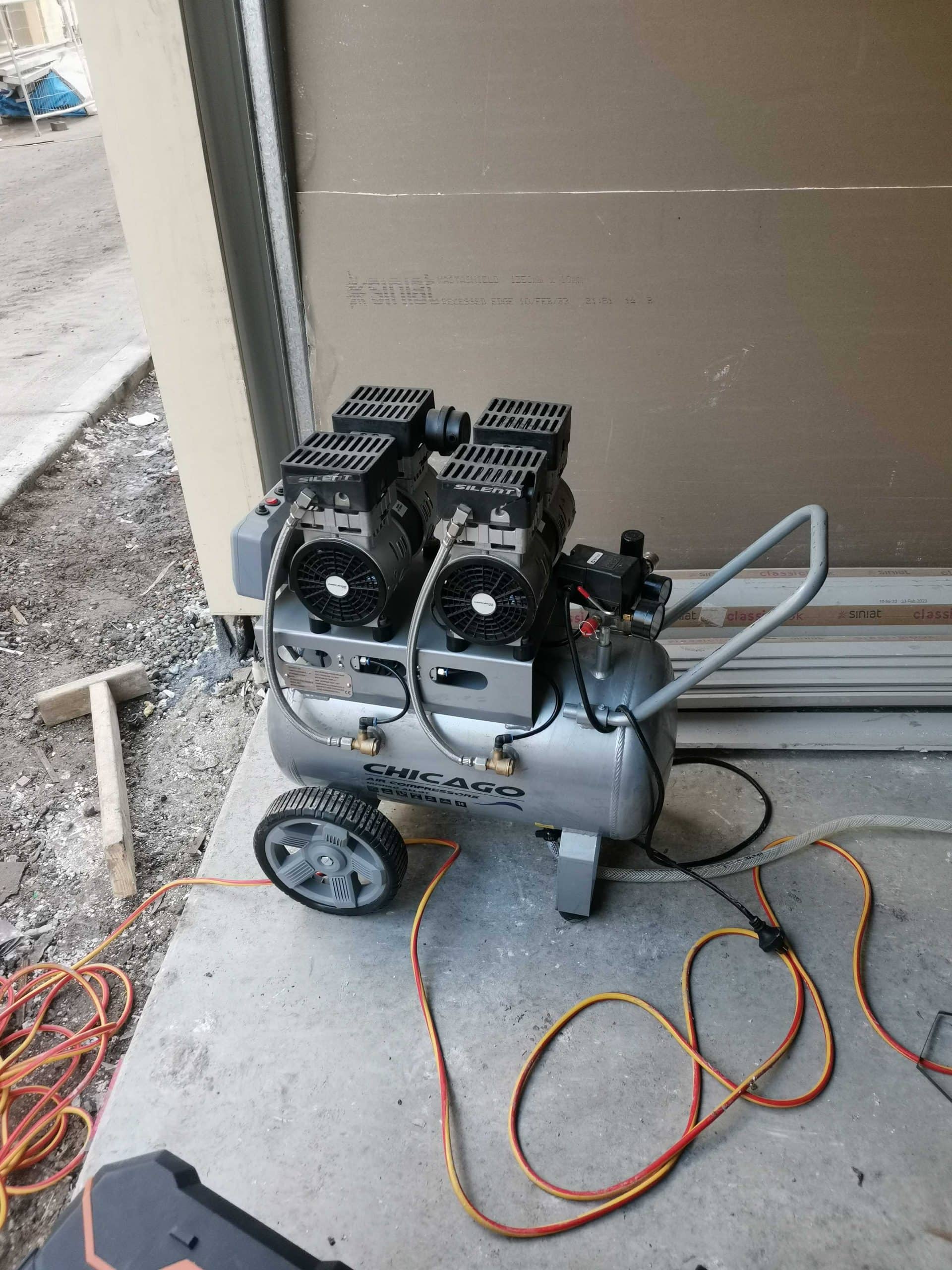
In general, air nibblers are noisier because it uses an air compressor to generate power.
Meanwhile, an electric nibbler relies on a motor to create power. Air nibblers’ noise level is around 85 to 100 dB, while an electric nibbler goes between 70 and 85 dB.
Vibrations
Both tools have limited vibration and are stable however an air nibbler has an extra area of smoothness under operation because there is no motor running inside the tool.
Air vs Electric Nibbler: Which one to choose?
Both nibbler types do their job and cut what a nibbler can cut.
The quality of cuts will depend on many factors, such as the thickness of the material, cutting capacity, your practice, and a nibblers condition.
However, the difference lies in the actual usage, your nature of work, and your personal preference.
If you’re looking for a sheet metal cutting tool for your garage, you can add an air nibbler to your line of pneumatic tools.
If you are a metal fabricator, you will need the power of an air nibbler.
For roofers, DIYers, and HVAC technicians, you’ll appreciate the power-to-weight capacity of an electric nibbler.
Additionally, you can also consider your budget and required maintenance. Electric nibblers are easier to maintain than air nibblers.
If you’re still undecided, we have narrowed your nibbler selections on this page and see which ones work for you.


