

- Are you getting ready for a skilled trade job? Physically?
- 1. Build up your core.
- 2. Strengthen your heart.
- 3. Build up your muscles.
- 4. Improve flexibility and mobility.
- 5. Practice proper body mechanics.
- 6. Have a balanced diet.
- 7. Stay hydrated.
- 8. Get some good sleep.
- 9. Manage stress.
- 10. Invest in safe and comfortable working clothes.
- Women are capable of working in the skilled trade.
Last updated on March 24, 2024 5:40 pm
Are you getting ready for a skilled trade job? Physically?
Aaron Barnett of BangingToolbox suggests: In carpentry, construction, or woodworking? Or the electricity or mechanics field?
It’s rare to find women in these fields unless you check in the back office. Women today can complete an apprenticeship program but still end up not holding tools or operating machines because they are perceived as… weak.
I can understand your frustration. Sure. Some jobs look challenging. They trigger one’s creativity and problem-solving skills. And that’s what excites you.
As a woman, you want to be accepted in any field you really like with your skills and capacity. However, not many people understand that women can actually perform physically demanding jobs in a skilled trade, just like in the gym.
For this reason, you must prepare your entire being, physically and mentally, for the upcoming challenges of being in a skilled trade.
Because you want to show that you are capable on-site, in the workshop, and you can diagnose and fix problems.
So, how do you prepare your body for a career in a skilled trade as a woman? Read on.

1. Build up your core.
Your core muscles are significant in carrying out movements such as bending, pulling, pushing, reaching, and twisting.
These movements are necessary for many tasks, including lifting heavy objects, using power tools, reaching in tight spaces, bracing against resistance, shoveling or digging, and handling materials.
Seems easy, right? However one wrong move with a weak core can result in injuries or strains that may stop you from working for the next few days.
A strong core will help you become more stable when doing everyday tasks.

Your abdominals, hip flexors, lower back, obliques, pelvic floor muscles, and the smaller glutes found at the sides of the hips are parts of the core muscles responsible for keeping the body stable, supporting the spine, and becoming more productive.
Today, many physical activities can help you strengthen your core.
- Planks
- Leg raises
- Side planks
- Bicycle crunches
- Bird-dog
- Back bridge
Do them twice or thrice a week, and be consistent.

2. Strengthen your heart.
Cardiovascular fitness is essential for physically demanding jobs. A strong heart that can efficiently pump blood to all body parts and allow you to perform strenuous work for longer periods.
Fatigue is less likely to occur, and your body will be able to recover more quickly from physical activity.
And if you are always exposed to changing temperatures, your body can easily regulate and adapt to these changes because you have a healthy heart.
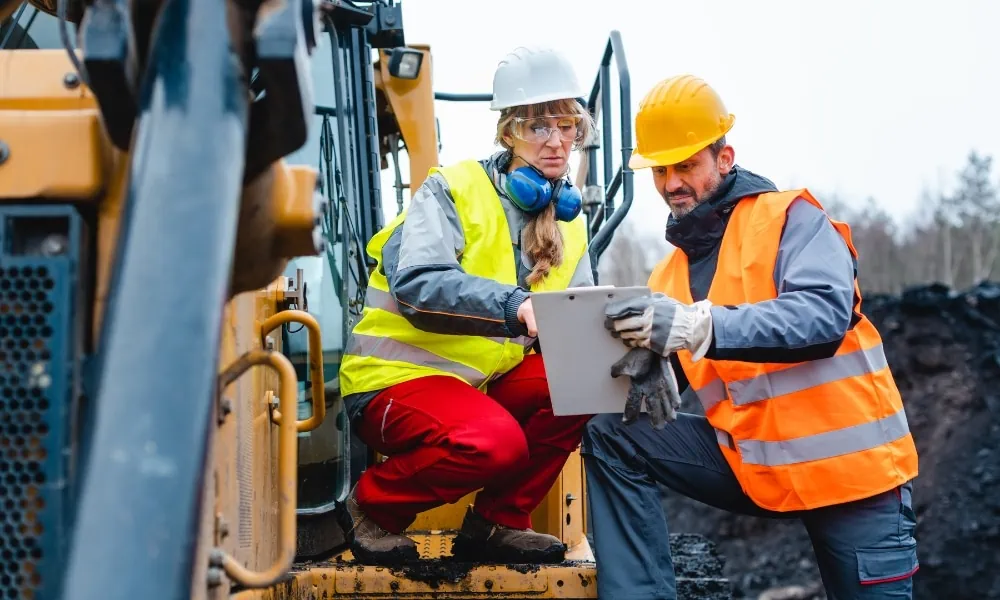
What can you do to strengthen your heart?
As recommended by our U.S. Department of Health and Human Services, adults must practice moderate-intensity aerobic exercise with a minimum of 150 minutes or vigorous-intensity aerobic activities with a minimum of 75 minutes per week [1].
In addition, you can dedicate steady-state cardiovascular exercises like biking, extended walking, or hiking.
Why don’t you ride the bike when going to and from the cafe?

3. Build up your muscles.
Manual labor is equivalent to repetitive and continuous physical stress during the day. If your job requires you to use your strength frequently, you need to build up your muscles and make them stronger.
Unlike men, women have fewer testosterones– the muscle-building hormones of the body. To get closer to the muscle development of men, women should work harder and longer.
You can do this through strength training, increasing the resistance or weight on your workouts, more protein intake, proper program, discipline, and consistency.
Practice full-body workouts that target muscle groups in the legs, shoulders, glutes, arms, chest, and back. Do not start with advanced training, or your body will be sore. You need to condition it by gradually adding difficulty to your training.
- Squats
- Push-ups
- Bicep curls
- Deadlift
- Bench presses
Set your goals and schedule your training for each week.

4. Improve flexibility and mobility.
Improved flexibility and mobility help a worker move with ease and ergonomically.
If you are a woman plumber reporting for your first duty, you need to be flexible and mobile enough to reach tight spaces under sinks and in drainages.
You will bend and move your joints in different positions to perform repairs properly. If you are not flexible enough, you may experience pain. You must prepare your body for the physical demands of the job.
Not only you will need enough flexibility and mobility to reach tight spaces. You will likewise need it for reaching, switching, and maneuvering tools while doing repairs.
By looking at the average male plumber, there’s nothing about being a woman that is holding you back.

From there, you can prevent future strains in the joints and muscles if you train your body for different movements.
How can you improve your flexibility?
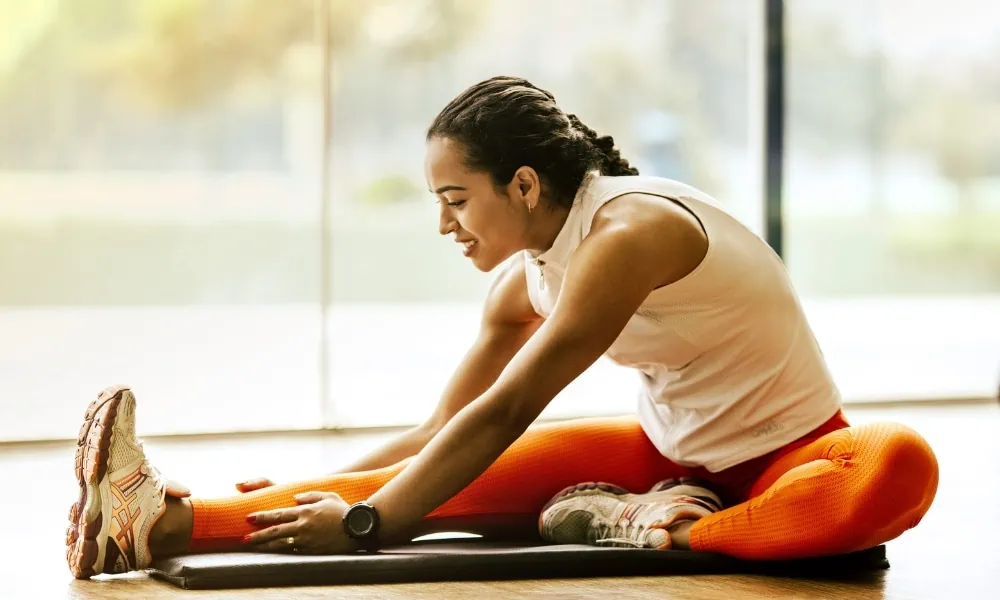
Stretching is your most basic routine. You can do this for ten to fifteen minutes before you report to work.
Additionally, perform motion exercises like arm circles, torso twists, foot circles, hip circles, neck tilts, shoulder rolls, or dynamic lunges for fifteen to thirty minutes. Easy, right?
5. Practice proper body mechanics.
Proper body mechanics is the appropriate usage of body parts when performing tasks in a skilled trade job.
It includes the proper posture or alignment of the body and movement to accomplish tasks to minimize the risks of injuries, discomfort, and strain.
You also use it to reduce the required energy to perform a task.
And it is crucial for jobs like this. You can end up with joint and muscle pains if you do not use proper posture when lifting heavy objects or using a power tool.
There are basic principles in body mechanics to apply in any physical work.
- You need to have a stable center of gravity.
- You must use a base of support wide enough to carry the body weight.
- The line of gravity must pass through your line of gravity.
- Elongate the spine when lifting to stop bones from grinding
- Supplement with glucosamine for cartilage repair and regrowth
- Dont bend your back or over-extend with a pelvic posterior tilt.
- Lower yourself and use your quads, glutes, and core when lifting.

When wearing a tool belt, you must balance the tools from both sides and ensure the weight is at the center. Play with a backward and forwards-facing toolbelt to help with your posture.
Even using the strongest leather tool belt does not necessarily save you from future joint and muscle problems unless you wear it correctly and arrange the tools strategically.
In using proper body mechanics, you have to know how to balance yourself and observe proper posture when pulling out tools, especially in awkward and confined spaces.
For example, you have to use the proper posture of lifting the hammer and striking the nail.
Even when using the lightest titanium hammer, you must still observe proper body mechanics to save yourself from future strains. Put your weight in the center when you bend your knees to hammer on tight spots.

6. Have a balanced diet.
Physical work requires more energy.
And your food intake will affect your entire performance at work. If you are used to light meals, when you are still not working for skilled trade, you’ll need to change your diet.
And like what I’ve said in my previous diet guide for carpenters, you must avoid processed food at all times because they are junk. But of course, your diet will be slightly different from men.
To help your body generate more energy, you need to have an adequate amount of calories. So you will get them on good carbs, healthy fats, and lean protein.
Talking about carbs, I have mentioned avoiding fast carbs that you get from sweet food like chocolates and cakes.
Additionally, you need foods that can help you become more alert, think clearly, and become more efficient in solving problems.
You can get these mental stimulants from good fats in fish like salmon, which contains omega-3 fatty acids.
Berries are high in antioxidants, needed for improved brain function and stress reduction. Likewise, don’t forget leafy vegetables like Swiss chards, spinach, or kale.
To sum it up, ensure to consume good carbs, healthy fats, lean protein, fruits, and vegetables. Aim to consume 20-30g of protein for both lunch and dinner.

7. Stay hydrated.
Staying hydrated is essential when performing physically demanding tasks. In fact, in any type of work, you’ve got to stay hydrated.
It doesn’t matter if you are a woman doing light jobs at the site. Even if you are documenting progress or planning your work for the day, you have to keep drinking fluids.
Being hydrated regulates your body temperature, maintains muscle and cognitive function, and helps in recovery, especially when doing manual labor.
If you keep drinking, you can keep up with your male colleagues at work.

When you’re out there in the construction site, workshop, garden doing landscaping or roof fixing tiles and exposed to the sun, you must equip your body from the heat by drinking water.
Being hydrated keeps you away from exhaustion or heat stroke.
You must stay hydrated so your body can keep moving when doing strenuous tasks. Sweating from physical tasks drains the fluid in our body. So we have to replace it with drinking water.
Staying hydrated will keep you energized, refreshed, and feeling active to do any work. It keeps you away from fatigue and muscle cramps while working.
Want to spice up your water? Here are healthy drinks you can try at work.

8. Get some good sleep.
Your body deserves to rest and recover after a long day and hard work.
When you sleep, your eyes are resting. Your muscles relax. Your lungs breathe slowly. There is no pressure. Your mind is empty of thoughts. At this stage, your entire well-being resets and refreshes from all the work you’ve had from the day.
Sleep provides a huge impact when doing physical work. With a lack of sleep, your body is short of complete recovery from the previous day. This effect explains why you suffer from fatigue the next day.
You can get irritated easily. Your body is not ready for manual work. You can easily fall into an accident.
I advise you to get enough sleep to avoid accident risks if you work at heights or any workplace.
Sleep deprivation leads to reduced performance and attentiveness at work. Of course, no one wants to burden their colleagues because of inefficiency.
To prepare your body, even if you’re a woman, condition your body and mind by sleeping enough every day.

9. Manage stress.
Physical work not only affects your body. It takes a toll on your mind too. Stress management plays a crucial role in carrying out tasks.
Some jobs appear easy, but they are stressful in reality.
For example, if you’re a female construction working on tight deadlines, a framer working on precision, an electrician working on complex wiring, an installer using a laser level for tile measurements, or similar.
These jobs exercise the mind and need concentration. This is how pressure in the mind affects your performance entirely.
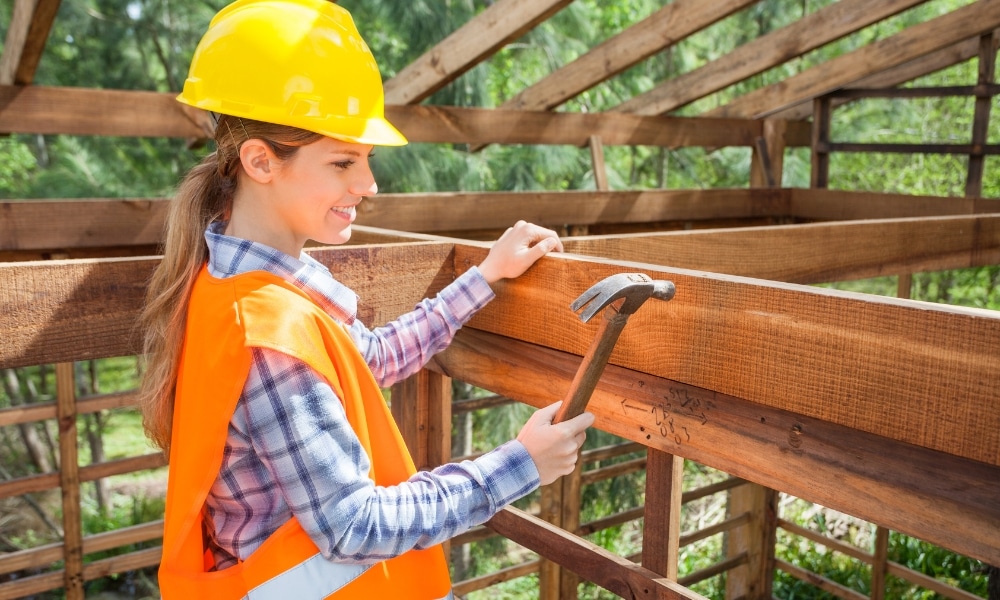
You can screw up measurements when stressed. Thankfully, women are efficient when working under pressure.
In these situations, you must have learned mindfulness techniques to apply when handling and preparing for similar jobs.
You can practice deep breathing, meditation, yoga, or exercise. This process helps you release the pressure in your body, heart, and mind.
Ultimately, you want to find a workplace that doesn’t put unnecessary pressure on you so that you can perform your best.

10. Invest in safe and comfortable working clothes.
I’ve worn a lot of safety gear when reporting to the site. But not all women will be comfortable with safety gear for the first time.
Although most of the gear is unisex, you can practice wearing them before you actually report to work.
Make sure they fit your size. Get a quality brand that is comfortable to wear and made of quality materials.

Women are capable of working in the skilled trade.
Even though women have smaller muscle fibers and fewer muscle-building hormones, you can train your body to adapt to and withstand the challenges of physically demanding work.
You dont need to be a male athlete to work in a trade. You just need good technique, colleagues, and the right tools and machinery at your aid.
The idea you have to be big, big to be a real carpenter is just a myth, it only helps in manual handling (laboring) but not in problem-solving, organization, and most carpentry works.
I’ve seen female crane drivers, electrical technicians, tile setters, and cabinet makers rocking their jobs.
It only takes some gut and consistent strength training to prepare your body for physical work in skilled trades to keep your body in optimal shape.
Do not forget to take care of yourself. Practice proper hygiene and manage your stress. Take time to help your body recover and drink water!
Tip: Make sure to replace the foam inside your hard hat regularly, as sweat can build up and result in breakouts.
More information:
- Physical Activity Guidelines for Americans a publication by https://health.gov/sites/default/files/2019-09/Physical_Activity_Guidelines_2nd_edition.pdf


