- Tool belt questions
- Why use a tool belt?
- 1. Get the right tool belt for you.
- 2. Placing the primary and secondary tools.
- 3. Hanging power tools on the strap.
- 4. Organizing nail and screw pockets.
- 5. Distributing balance and weight.
- 6. The proper way to wear your tool belt.
- 7. Don’t overload your tool belt.
- 8. Use a leather tool belt.
- Should you wear tool belt suspenders?
- Common mistakes when wearing a tool belt.
- Tips in wearing a tool belt
- Should you wear your tool belt on the front or back?
- Tips for working with a tool belt on
- A must-have for carpenters and DIYers
Last updated on October 24, 2023 12:15 am
Tool belt questions

Can wearing a tool belt mess up your hips?
Tool belts may cause strain in the hips when worn with unevenly distributed weight. And practices such as putting too many heavy tools on your tool belt with uneven weight distribution can lead to musculoskeletal disorders. If you have too many tools on the go, get yourself a rolling tool bag.
What side should I wear a tool belt on?
You should not wear a tool belt only on one side. Make sure the weight of tools from both sides is distributed evenly. And to keep the blood lighter, do not include tools you are not going to use.
What material is more durable for a tool belt?
Leather tool belts are known for their durability and ability to hold more tools better.
Why use a tool belt?
According to Aaron Barnett of BangingToolbox: A tool belt is what we need to hold onto our tools when moving around, the strap should be worn on our waist depending on the type of tool belt.
A chippy’s apron will make DIY and building more convenient by giving immediate access to our tools.
When we wear a tool belt improperly, this can hinder our movement because of tool placement and position which can cause someone to trip and fall, or worse, could get someone impaled or struck by their own tools.
Considering long-term use, other than being uncomfortable, improperly wearing a tool belt can affect the way we walk and our long-term body posture, and that is why you need to know how to properly mount your tools to your waist.
Avoid wearing your toolbelt for jobs that don’t need one, to give your back a rest, and to do yoga from time to time to maintain your posture.
So, how do you wear a tool belt? Let’s start with the first step.

1. Get the right tool belt for you.
The first step when learning how to wear a tool belt is getting the appropriate tool belt.
When life comes to your job, project, or hobby, consider what task you’ll be doing and what tools you’ll need when choosing a tool belt.
With different varieties of tool belts, you can optimize the way you organize your tools by choosing the right kind of tool belt.
Consider the material your tool belt is made from for durability and comfort.
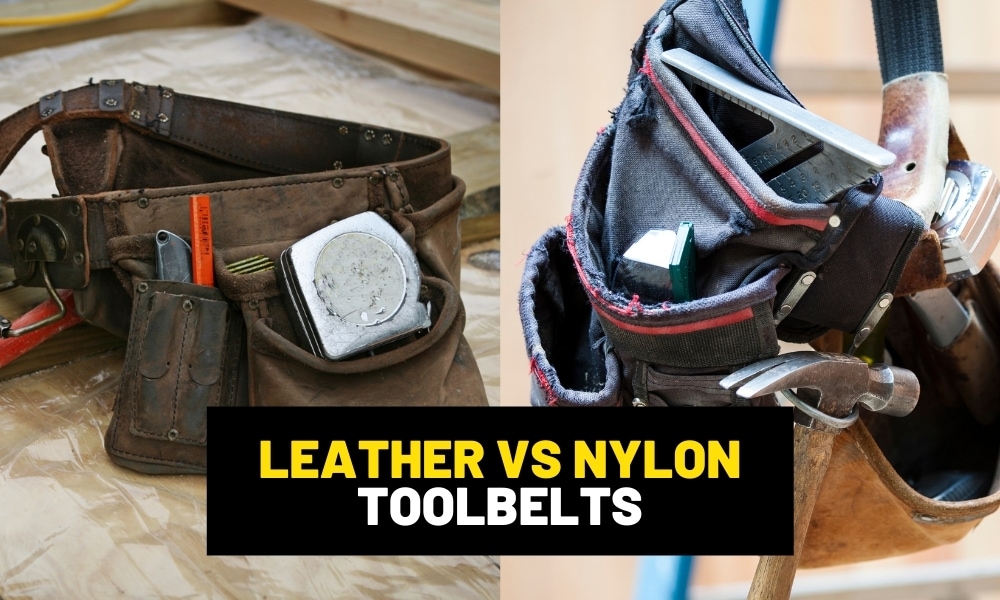
For example, fabric tool belts are soft and flexible, but prone to wearing and tearing; while leather tool belts will mold to your body and are sturdier, but will need some maintenance.

Consider the carrying capacity and the number of pockets a tool belt has for storage. Some tool belts are good for smaller-scale projects and for packing light, but won’t be able to pack as many tools.
While some tool belts are bigger, the extra size can be inconvenient to carry around and bad for your posture.
Consider the weight distribution of your tool belt since this can affect your workflow and body posture.
Some tool belts have uneven weight distribution due to the lesser carrying capacity, only providing the majority of weight storage on one side.

2. Placing the primary and secondary tools.
Tool belts can carry all kinds of tools, but organizing your tools according to importance and usage is the most recommended when optimizing their storage.
A tool belt is meant to aid with your workflow after all. When you know how to wear a tool belt properly, you know you have to sort the primary and secondary tools.
Here are common primary tools that should always be stored in a tool belt:
- Claw hammer
- Chalk line
- Carpenter’s pencil and pen or Sharpie
- The tape measure (I find the tape measure is better stored in the right-hand side nail pouch).
- Ruler
- Sliding bevel
- Utility knife
- Speed square
Here are some common secondary tools that can be kept in your belt :
- Nails for the current ask
- Screws for the current task
- 4-in-1 Screwdriver
- Chalk line
- Torpedo level
- Electrical tape
- Lineman pliers
- Nail gun or impact driver hooked onto the main belt
3. Hanging power tools on the strap.
Some tool belts are built with durable straps, dedicated to bigger items, specifically power tools. Power tools such as nail guns and impact drivers.
Builders can safely store some power tools like drills, impact drivers, and nail guns on tool aprons designated with buckle-type leather waist straps.
Aprons that have a clip strap cannot hold the extra wait and could come undone and damage your tools.
Have the tools facing away from you with nailgun nozzles downwards from your own body.
Fasten the strap tightly around your waist when in use to prevent your tool belt from sagging down from the extra weight which can cause injury to your body posture for extended periods of time.

4. Organizing nail and screw pockets.
Tool belts can have secondary storage pockets at the front, usually smaller pockets opposite of your dominant side is meant to store smaller items that can be easier to reach like nails and screws, organization is key.
For small items like fasteners, place screws and nails in designated pockets and avoid mixing different fastners up.
Keep your pockets stable and upright when you are not wearing your belt to avoid spillage.
You a cordless blower once a week to blow out all the woodchips and dust that has accumulated inside your tool apron.

5. Distributing balance and weight.
There are many musculoskeletal disorders [1] associated with working on construction sites. Having an unbalanced tool belt can affect the way you work, affecting your posture and movement.
If heavier tools are only on one side, you need to compensate on the other side by putting more tools or fasteners to distribute weight for better balance.
If you have to carry heavy tools regularly, you have to consider the long-term effect even if you can bear the weight right now.
Avoid carrying extra tools that you don’t need.

6. The proper way to wear your tool belt.
Make sure that your tool belt has the required holes for tight fastening to your waist, you want the strap to be secure but not too tight.
If you need to make your belt tighter you can use your cordless drill to drill a new hole if your belt is made from leather.
When wearing your tool belt the strap should be loose enough to bend over without strain, but tight enough to sit above your hips and on your waist.

7. Don’t overload your tool belt.
Don’t overload your tool belt by only having the tools you need to avoid straining yourself and inconveniencing your workflow.
Packing unnecessary tools can also pose a hassle, being irrelevant to your current project.
As much as possible, take off the tool belt when doing manual jobs when you don’t need portable access to your tools.
Being lighter is always better when working while moving around.
8. Use a leather tool belt.
A leather tool belt is an all-around classic, a top pick for everyone doing building and carpentry.
Leather tool belts are more durable compared to other materials and are most recommended.
Leather look sleeker in comparison. However there are different kinds of leather tool belts to consider, such as two-ply leather, full-grain leather, bonded leather, saddle leather.
Use the strongest leather sot that your toolbelt will last for many years.

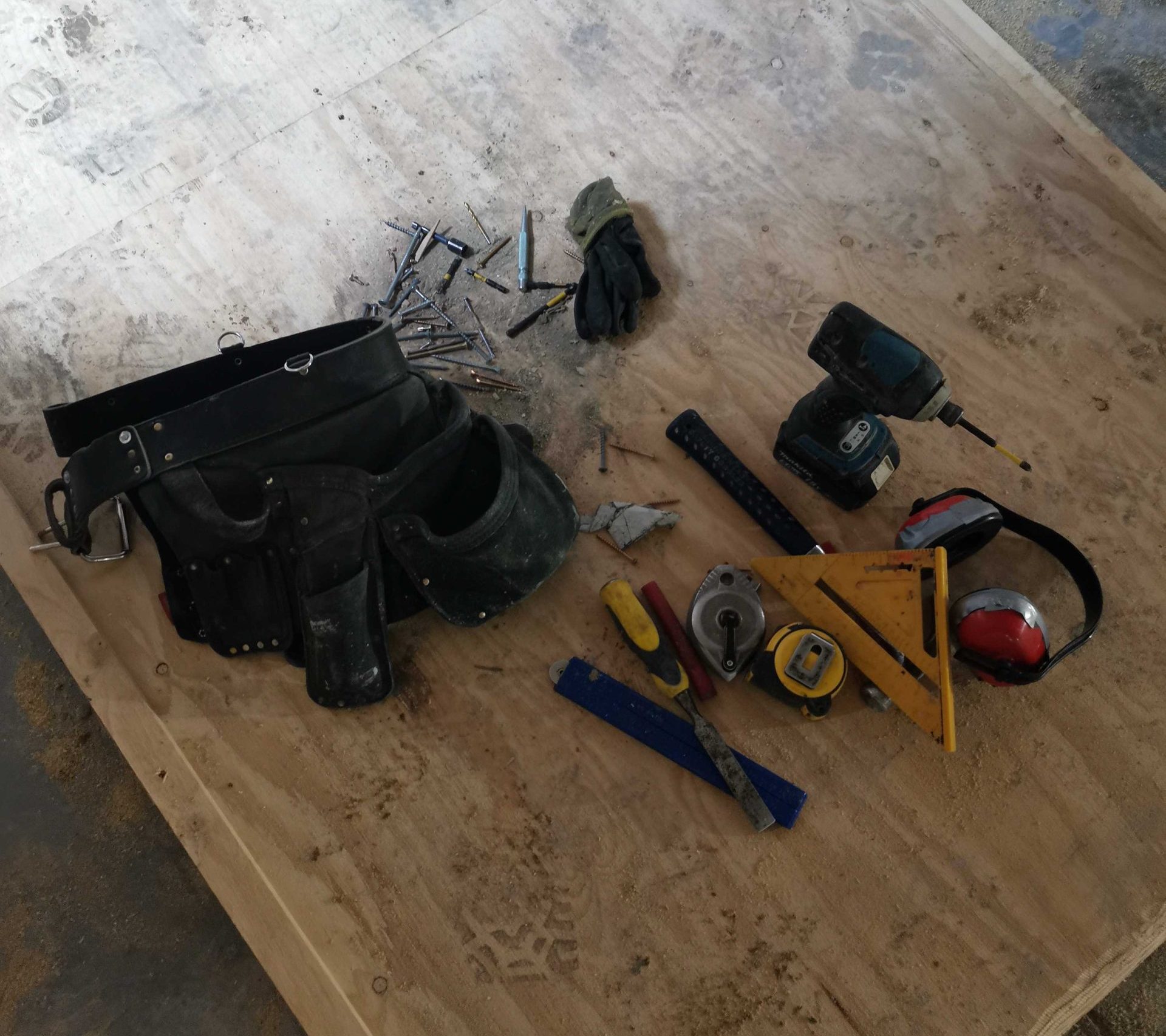
This is my leather tool belt.
Should you wear tool belt suspenders?
No. A tool belt shoulder strap is not recommended. A tool belt strap is not recommended since as it distributes weight from your waist to your shoulders, this is bad for your back and may cause long-term injury [2].
Tool belt straps are unergonomic even though they might temporarily help weight distribution the dowside is that the straps add pressure to your back instead of your hips.
Use a modest tool belt that is not overloaded and fitted to hold weight evenly, minimizing body pain.
So if you ask, if wearing a tool belt can mess up your hips? When worn properly, the answer is no, but suspenders can mess up your back if you wear one too often.
I have seen older carpenters who have used shoulder tool straps every day that have now got noticeable hunchbacks years later.

Common mistakes when wearing a tool belt.
- Do not carry tools that cannot be accommodated by a tool belt, like if a power tool cannot be fastened properly to a leather buckle strap, don’t force a weaker toolbelt.
- Again, do not overload the tool belt with hand tools that you do not currently need.
- Do not neglect your tool belt, as you have to also maintain the leather after being subject to water and rain with a leather conditioner.
- Do not place your tools with a sharp edge like chisels upwards towards your body.
Tips in wearing a tool belt
- Make sure your tool belt is adjusted properly according to your size, not too tight or too loose around your body.
- What side should you wear a tool belt on? At your front keeping your primary tools on your dominant side and your secondary tools on your non-dominant side is the most efficient way to organize and wear your tool belt.
- Remove the belt when climbing a ladder and hoist the tool belt up with a bucket and rope to avoid any injuries or loss of tools when moving around.
- Create plastic protectors inside your tool belt to avoid sharp chisel damage.
- Always use magnets in your tool belt to secure chisels and in place to help avoid the tools falling out accidentally when climbing.
- Also, use a powerful magnet to hold your screwdriver bits for quick access on the outside of your apron and to avoid losing bits.
Should you wear your tool belt on the front or back?
The front is more professional, for easier and faster access to your tools.
If your tool belt is not comfortable, from the front the size might not be right, or you could have too many tools loaded inside.
You should pair your tool belt with a portable tool bag for a bigger range of tools you need close by like chalk lines and torpedo levels that you don’t need to carry in your toolbelt all the time.
Don’t take a tool belt too big for you and don’t get a tool belt that holds your hammer too low down otherwise the handle can hit your knees when you walk if you are a shorter person.
I find many toolbelts hold hammers down too low.
When to wear toolbelt suspenders and shoulder starps?
Construction workers rely on tool suspenders when they don’t know or can’t wear a tool belt on their hips properly, or because of too much weight loaded inside pushing the hips forward and arching the back too much.
Suspenders as we talked about are bad for your back but can help with temporary hip pain by distributing the weight of your tool belt, and aiding with heavier tools.
The straps distribute the weight up to your shoulders and away from your hips where your tool belt is normally sitting.
Suspenders also allow you to carry more tools while minimizing discomfort when working due to their ability to redistribute more weight.
But you should not make a habit of using shoulder straps as to much pressure on your shoulders can cause a nasty hunchback as I have seen in other carpenters.
How to wear a tool belt with suspenders?
- To wear a tool belt with suspenders, attach the suspenders to the back and front of your tool belt.
- Depending on the type of suspenders you can open the straps from the front every time you take your tool belt on or off. Otherwise removed from your shoulders.
- Locate and position the braces evenly to cross your back and back to the chest every time you fit your toolbelt.

Tips for working with a tool belt on
When working with the tool belt, make sure to follow the hierarchy of relevance for your tools when organizing and assigning compartments.
Your primary tools must be the most accessible to you when working.
When bending down and having to work faster, reverse the belt to your rear so that your tools will not be pressing against your body which could cause discomfort, while you’re working.
And when you are doing jobs that don’t need constant changing of tools, take your belt off while you are working to give your back a rest.
Here, we’ve made browsing some tool belts easier for you.

A must-have for carpenters and DIYers
A tool belt is essential for everyone who needs to have tools within arm’s reach while organizing and keeping your tools together. In fact a leather toolbelt is a nice gift to help out a new young chippy.
A tool belt is essential for all carpenters and DIYers making switching tools easier and faster to make your workflow more efficient.
Your projects require you to have full access to your most needed tools and a tool belt is your companion and is your favorite framing hammers home.
More information:
- Preventing musculoskeletal disorders in construction workers, published in https://elcosh.org/document/1648/d000560/preventing-muskuloskeletal-disorders-in-construction-workers.html
- Controlling Ergonomic Hazards, a publication by https://www.osha.gov/sites/default/files/2018-12/fy11_sh-22240-11_ErgoHazards.pdf