- Is it time to ditch your old tape measure?
- What is a laser measure?
- What is a standard tape measure?
- Application: Laser measure vs tape measure
- Measuring process
- Ease of use
- Accuracy
- Measuring capacity
- Safety of operation
- Data Collection and Management
- Laser measure vs. tape measure: Which is Better?.
Last updated on March 23, 2026 10:16 pm
Is it time to ditch your old tape measure?
Will the laser distance measure replace the traditional auto-roll steel meter measure? Are these laser measuring tools as accurate as my handy tape measure?
According to Aaron Barnett of BangingToolbox: The following questions have been ongoing debates for professionals who deal with distance measuring frequently.
A lot of traditionalists will consider this technology unreliable, especially if they have no idea how a laser measure works or how to download a helpful app on their mobile.
For someone who got used to pulling out the steel tape measurer, nothing beats the confidence of seeing the tape line marks when measuring.
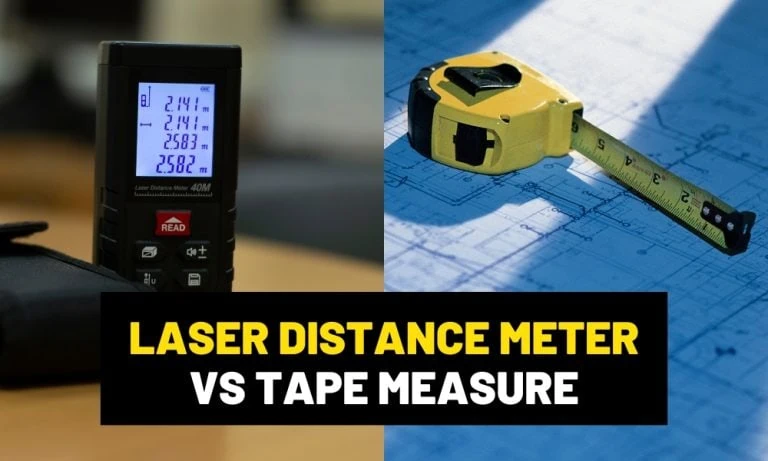
We made a comprehensive guide comparing laser and tape measures to determine which measuring tool is appropriate for your line of work.
What is a laser measure?
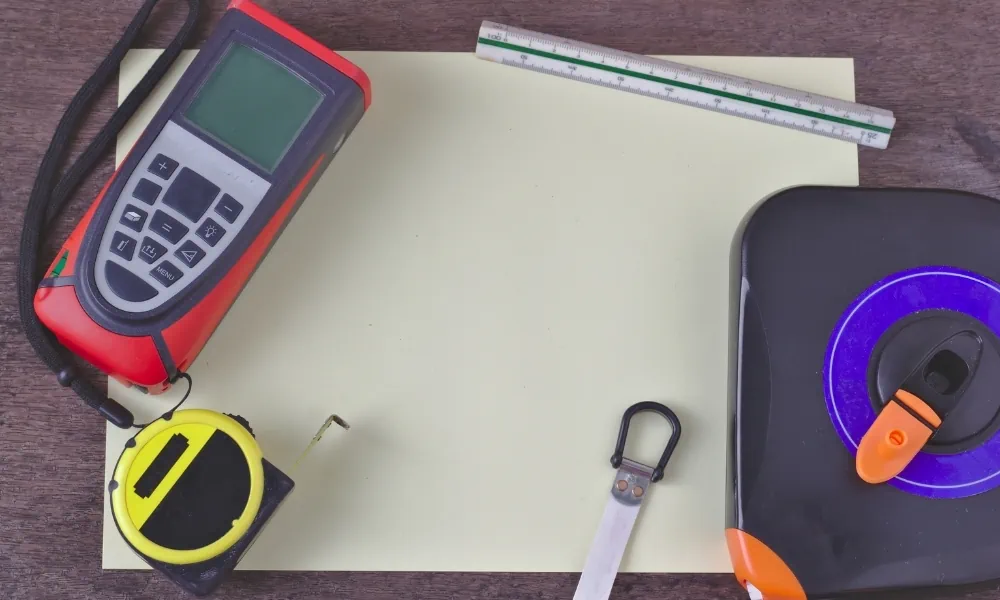
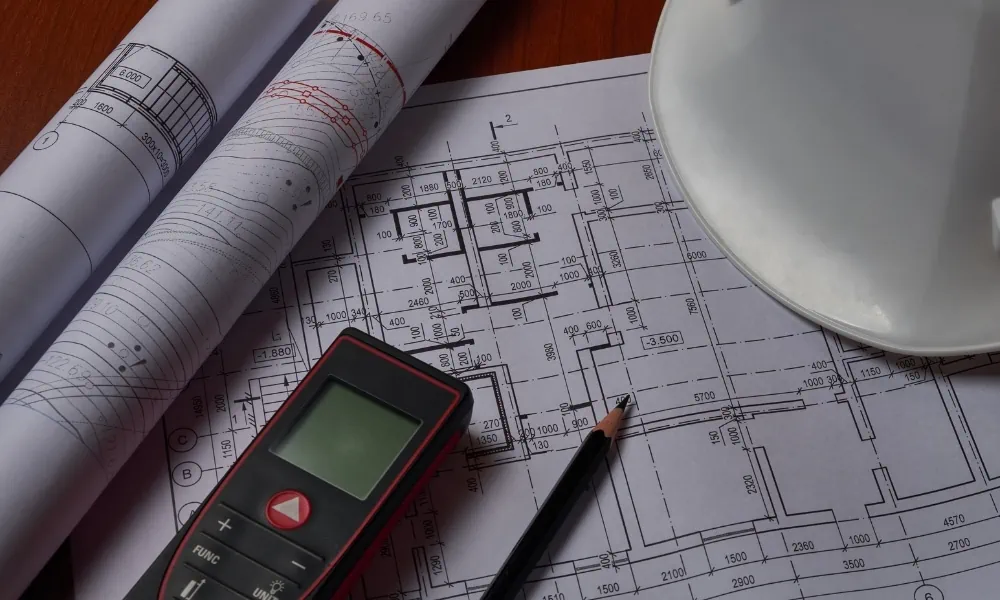
A laser measure is a handy digital measuring tool that utilizes a laser as the mode of measurement.
Through the principle of pulse measurement, which is the time and speed a light beam takes to hit the target and bounce back to the device, the tool’s small computer can measure the distance or length of an object from a reference point to a target point.
The tool is enclosed in a durable casing that houses a backlit monitor that displays calculations and a set of buttons to operate the device. Learn more about the parts here.
Why is laser measure better?
- It takes only seconds to display calculations.
- Accuracy within ⅛ or 1/16 of an inch, depending on the unit or distance.
- Measures long-range distances of up to 400 or 650 ft, depending on the device
- Easy to operate
- Multiple functions available
My few issues with laser measure
- More expensive option
- Possible accuracy problems with some models
- Visibility issues outdoors
- Need more practice to understand the array of extra attributes available
What is a standard tape measure?
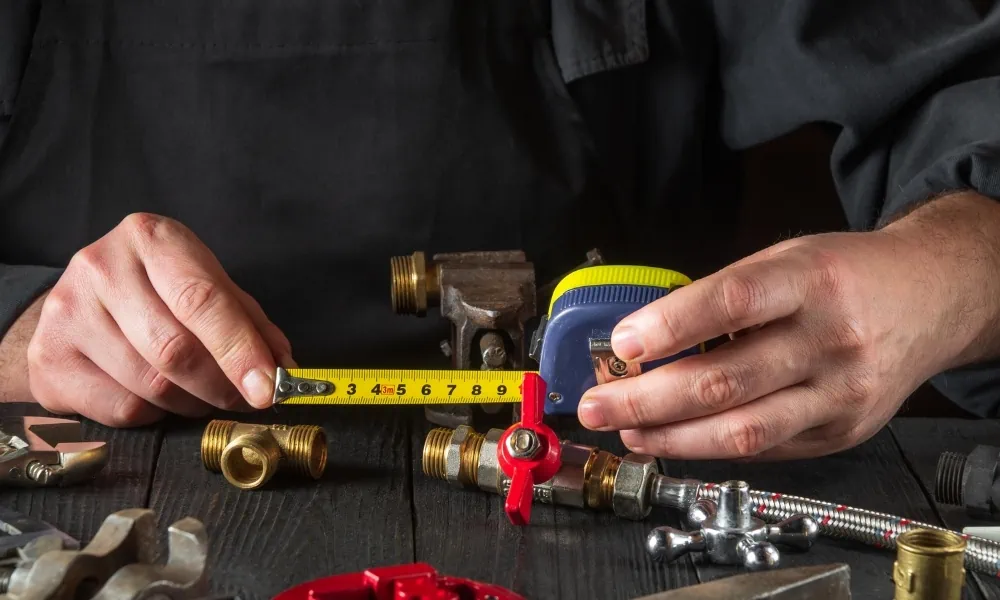
A tape measure is a length or distance-measuring tool that works like a ruler. However, it is more flexible and longer.
A tape measure is either made from a plastic or metal strip.
Embedded in the strip are the inch or metric measurements, like other length measurers such as rulers.
The strip is rolled into an enclosed hard plastic or rubber casing.
To use the tool, you must pull the end from the opening, place it on your target object, and extend it to your desired endpoint.
From there, you must ensure to secure the other end for accurate measurement.
Why you should have a standard tape measure?
- More affordable option
- Suitable for rugged handling
- Can bend to shape
- Straightforward to use
- Better visibility
My problems with a tape measure
- Limited range
- Limited function
- May sag due to weight
- It needs both hands to operate.
- Eventually, the steel will break around the head
- Needs replacing every year from regular use
Application: Laser measure vs tape measure
Laser measure and tape measure have many applications in carpentry, construction, design, landscaping, architecture, painting and more.
Laser measure
For laser measures, you can measure distances from one point to another, such as laying out a foundation or measuring spaces between joists or studs.
Knowing how to measure distance helps you allot needed space for new walls or build a deck or patio.
It is also helpful for measuring ceiling heights. You can also use the attributes for more complicated measurements, such as finding the slope of a ceiling.

While these are just a few of the many uses for a laser measure, here are the professionals that would benefit more from this technology:
- Architects and engineers
- Land surveyors
- Interior designers
- Real estate agents
- Plumbers and electricians
- Landscapers and gardeners
What can you measure with a laser measure?
- Length, width, and height
- Distance
- Area
- Volume
- Pythagoras
Tape measure
Despite the limited functions, you can also measure a lot with a tape measure.
You can take length, width, and height measurements for home renovation projects like building cabinets or installing a door.
You can also measure pipings and tubes needed for electrical and plumbing applications like cutting galvanized steel.
Use a tape measure for framing projects such as cutting metal studs.
You can also use a tape measuring tool for DIY projects, such as getting the height for the TV installation on the wall.
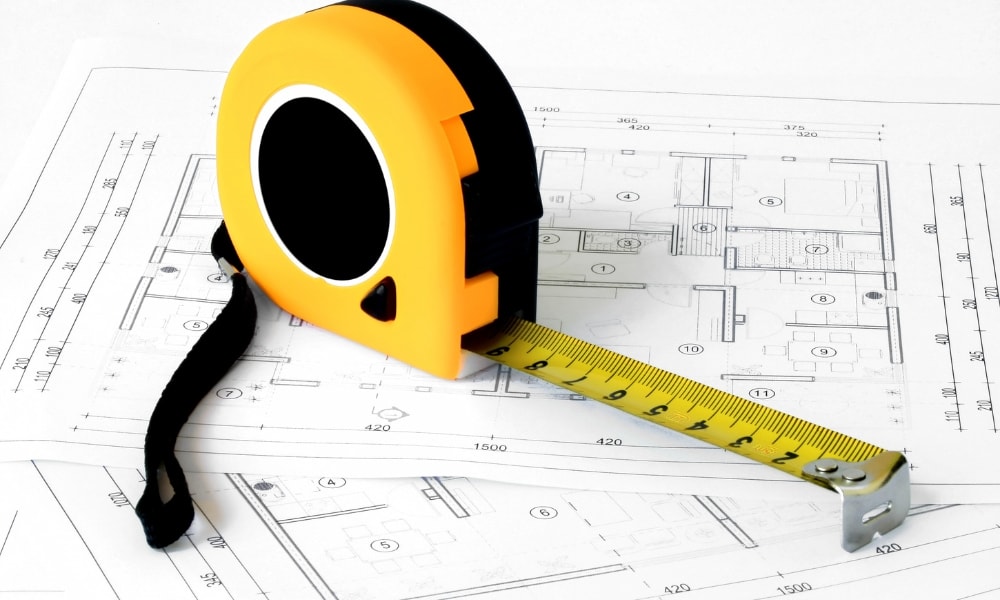
Nevertheless, a tape measure is a staple in anyone’s toolbox and useful for:
- Carpenters and woodworkers
- Furniture makers
- Contractors, architects, and interior designers
- DIYers
What can you measure with a tape measure?
- Length
- Width
- Height
- Distance
- With the right calculations, you can also find area, volume, and angles.
Measuring process
Laser measure
When measuring with a laser distance meter, you only need your fingers to make a few clicks. Choose the function you need and select the measurement units you want to be displayed.
(Metric measurements are more accurate).
You can measure distance, area, or volume and Pythagoras. Depending on the device model, you might measure distances outdoors, even in daylight.
The system uses the pulse measurement principle to capture distance, as discussed above.
If you are already familiar with the parts of a laser measure, use the measurement button to activate the tool and capture measurements.
Select area, volume, or distance measurements with the function button. And press the unit button to read preferred measurement units.

Tape measure
Meanwhile, using a tape measure is a straightforward process.
You only need to hold the other end of the tool and extend the steel tape to the point you want to measure, make sure the endpoints are at the right spot, and read.
The tape already has measurements embedded. So you can read the distance in inches or centimeters.
You may notice the head of the tape has movement. This is to adjust to different styles of measuring.
Make sure that when you do butt measurements into a corner, the head of the tape is compressed.
And when you hook the tape over an object or material, ensure the head of the tape has extended. This will ensure steel tape accuracy.

Ease of use
In terms of ease of use, a tape measure is much more straightforward if you are looking to measure a small distance.
But for someone who will calculate area, volume, and Pythagoras, you will appreciate the functionality of a laser measure.
- You only have to extend the tape measure to get a distance measurement.
- You need to familiarize the functions of the buttons in a laser measure.
- If you are familiar with the buttons, you will find it easy to take distance, area, and volume measurements.
- You still need to take multiple measurements and compute area and volume by yourself if you use a tape measure.
- Use the laser measure for high distances and longer ranges.
- Use the tape measure in shorter ranges.
- You do not need to maneuver when measuring on corners with a laser measure, unlike when using a tape measure.
- I find most laser tape measures are easier to read.

Accuracy
As a standard, a 12 feet tape measure is accurate by 1/32 of an inch. Meanwhile, laser measurements are accurate by ⅛ of an inch within 30 feet. However, some laser measures, like the Leica Disto D2, are 1/16 inches accurate within 328 feet.
Measuring capacity
Laser distance meters can measure up to 650 feet. Some laser measures could measure from 100 to 400 feet.
However, many factors can affect the capacity and accuracy of laser measures: reflection & refraction, ambient light, and obstructions.
These are just a few of the obstacles to the accurate measurement of laser distance meters.
For tape measures, some units can measure up to 30 feet or 9 meters. Longer tape measures can measure up to 100 feet or 30 meters but are not as accurate.
Some models can even measure 500 feet.
However, the accuracy of a tape measure can be affected by several factors: tape material, tape width, tension, hook placement, sag, stretch, and some environmental factors like elevation.

Safety of operation
Both laser and tape measures should be safe when used properly. However, you must consider a few things when using each tool.
First, the laser is harmful if directed into anyone’s eyes.
Although some manufacturers include an auto-shut-off feature, you must take extra precautions when using a laser measure. Use laser safety glasses to protect your eyes.
On the other hand, tape measures edges are sharp when mishandled. These edges can cause cuts or injuries.
Be careful when extending the tape if any nicks are on the blade.
A tape can snap back when extended – quickly and forcefully. It could snap into your eyes or arms. So make sure to pull the tape measure out and in carefully to avoid accidents.
A laser measure is a safe way to get awkward measurements, you don’t have to get up high and risk falling from a ladder.

Data Collection and Management
Tape measures will require you to document and calculate your measurements manually.
You have to solve calculations for area and volume physically.
Although, you can utilize digital tape measures that have measurement storage. They are still rare to find.
Unlike a laser measure, you can store and transfer data to a separate folder through an integrated app.
Some models store up to 50 measurements.
Remember that a laser measure calculates area, volume, and Pythagoras instantly.
That means you do not have to measure and calculate results manually.

Laser measure vs. tape measure: Which is Better?.
A laser measure can help you measure without a second person or from having to go to awkward or dangerous heights.
Plus, you can do instant calculations and take multiple measurements for instant documentation for later.
However, tape measures are best for short-range measurements. If you are not so techie, you might get overwhelmed with the many buttons of a laser measure.
But when you finally know how to play with the modes, measurements, and measurement capturing, you’ll appreciate the convenience of a reliable laser distance measure.