
- The real deal with plastics
- Things to consider when cutting plastics
- Tools for cutting thin plastic sheets
- Tools for cutting thick plastic sheets
- Tools for cutting curves in plastics
- Tools for cutting holes in plastic
- Tools to sand and buff plastic
- How to cut plastic bottles?
- How do you cut PVC plumbing type?
- How do you cut plastic corrugated roofing sheet?
- How do you cut plastic lattice?
- Safety tips when cutting plastic
- Plastic can be a great material to use because it’s cheap, light, and strong.
Last updated on October 23, 2023 9:48 pm
The real deal with plastics
Aaron Barnett of BangingToolbox suggests: If you’ve ever tried to cut plastic such as acrylic or PVC, you would know that it is not as easy as cutting wood or metal. Plastic can crack, bend, or chip when being cut because of its molecular properties and structure.
With a low melting point, plastic can also deform, becoming soft or liquefy from friction when cut with power tools. In this guide, we’ll show you how to properly and painlessly cut different types of plastic and the tools you will need.
Things to consider when cutting plastics
The different types of plastics
- Polyethylene Terephthalate (PET)
- High-Density Polyethylene (HDPE)
- Polyvinyl Chloride (PVC)
- Low-Density Polyethylene (LDPE)
- Polypropylene (PP)
- Polystyrene or Styrofoam (PS)
- Miscellaneous plastics such as Polycarbonate, Acrylic, and Nylon
Tools
A lot of tools can cut plastic, but having the right one can yield better results and faster work times.

Plastic thickness
Thin plastic is easy to cut with a blade or shears while thicker ones may require the use of saws with special non-melt blades [1].
Cutting precision required
Depending on the tool, precise cuts usually come with the drawback of being slower since plastic can melt or crack when cut too fast.
Tools for cutting thin plastic sheets
- Using scissors or electric shears. This is a fast and easy way to shape or cut thin plastic panels. Scissors or shears are flexible enough to create curved and angled cuts on thin plastic without needing a guide.
- Using a utility knife. A utility knife can cut at great speeds and offers precise, straight cuts. This method also produces cleaner cuts with lesser chances of cracking or chipping. Cutting with a hot knife usually involves multiple passes depending on the piece’s thickness.

Tools for cutting thick plastic sheets
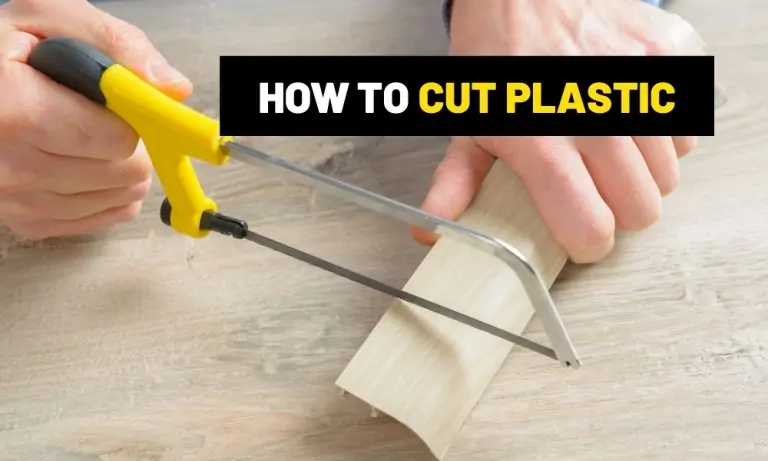
- Using a hack saw. A hacksaw can be used to cut plastics by hand. A little slower than the power tool alternatives it can do the job without melting the plastic.
- Using a jigsaw. A jigsaw provides more flexibility when cutting complex shapes and curves on thicker plastics. With a thin jigsaw blade for cutting plastic, it’s easy to steer and maneuver during a cut.
- Using a table saw. While it can’t cut intricate shapes and curves very well, table saws for cutting plastic sheets have the power to quickly and straightly cut through thick plastic. Just be sure to use non-melt blades to keep deformation to a minimum. Or an old fine-toothed blade (Don’t damage a new blade). Here are the differences between a track saw and a table saw for cutting sheetings.
- Using a circular saw. Circular saws offer a middle ground between speed and flexibility that’s offered by the table saw or a jigsaw respectively. They have an adequate amount of control and are portable enough to be used and stored virtually anywhere. Just make sure you use an old fine-toothed blade or a masonry blade.

Tools for cutting curves in plastics
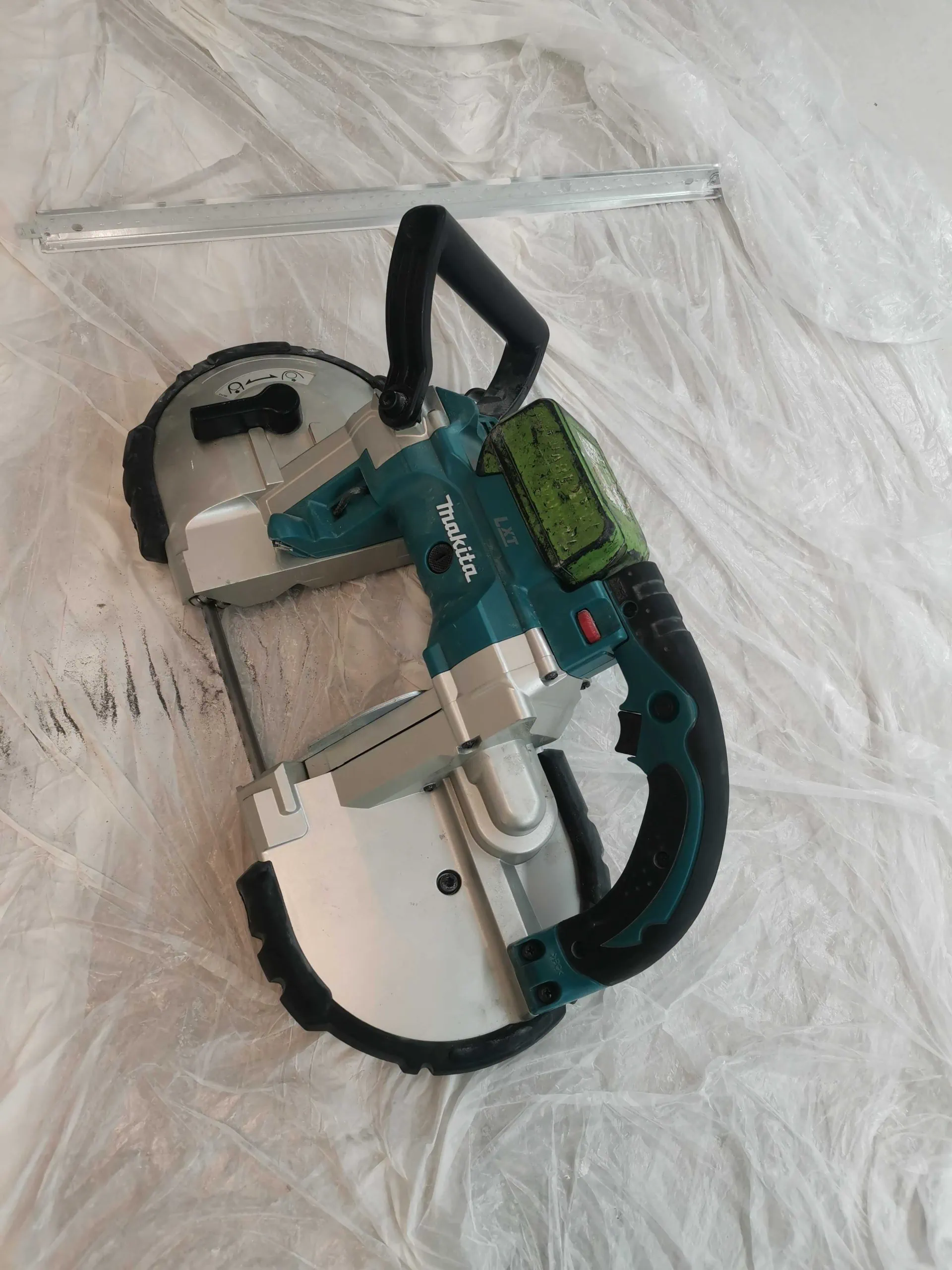
- Using a bandsaw. When it comes to cutting curves in plastic, the bandsaw is a powerhouse. This method is favored in industrial applications where cutting speed and power are important.
- Using jigsaw. A jigsaw is a versatile option when cutting complex shapes and curves on thick plastic. It’s easier to use and is more portable than a band saw, making it viable for less experienced users. Here’s a detailed list of jigsaw blades for different materials.
- Using reciprocating saw. While a jigsaw is limited to cutting across a flat surface or sheet, a reciprocating saw can be used to cut plastic at angles not perpendicular to its surface but with a bit less accuracy.
- Using a scroll saw. With the right blade, a scroll saw can be used to cut curves and intricate shapes on plastic. This cuts slower than other tools, keeping deformation to a minimum and allowing for highly precise cuts.
Tools for cutting holes in plastic
- Twist drill. With the right amount of lubrication, drills with normal twist bits that have a 90° point can cut small holes in acrylic and plexiglass without cracking or melting.
- Step drill. Step drills don’t need as much lubrication as twist drills and can safely drill through plastic without cracking since it steps up the hole size as it goes through the material.
- Hole saw. For even larger holes with a diameter greater than an inch and on a thick sheet, a hole saw is the best option. It’s the best choice for cutting circles in wood, metal, and plastics. By drilling carefully, stopping, and backing out from time to time, you can cut through the plastic with little melting or cracking.

Doing detailed cuts
A Dremel and other rotary tools have a wide selection of bits and blades which, combined with its small size and great maneuverability, make it great for detail-working plastic.
Tools to sand and buff plastic
- File sander. While being more work-intensive to use, a file sander offers finer control when smoothing out rough plastic edges and in tight corners.
- Angle grinder. Just like the bench grinder, it’s also a very powerful tool that can be used for buffing and sanding plastic. An advantage this has over a bench grinder is its portability and maneuverability since this is not mounted on a bench.
- Finishing sander. A finishing or orbital sander allows you to smooth out large parts of a plastic surface if using high-grit sandpaper.
- Palm sander. Compared to a finishing sander, a palm sander can offer an even smoother polish. However, it’s only often used for smaller pieces.
- Bench grinder. A bench grinder is a powerful tool for quickly sanding out rough plastic surfaces. With the help of a buffing wheel, you can also buff and polish surfaces.

How to cut plastic bottles?
Cutting tools to use:
Utility knife and heavy-duty scissors for cutting plastic.
Other tools needed:
Marker.

Procedures to cut plastic bottles
- Using a marker, draw your cutting line on the plastic bottle.
- Secure the plastic bottle with your hand. Alternatively, you can use a clamp or a jig.
- Grab your utility knife and start the cut by forcing the blade through a point on your cutting line.
- Continue the cut by dragging the knife’s blade along the cutting line.
- Use scissors to do finishing touches and trim off jagged and rough edges.
How do you cut PVC plumbing type?
Cutting tool options:
Besides specialized PVC cutters, another good option is a hacksaw or a chop saw.
(A toothed blade can crack the pipe, so the chop saw should have an abrasive wheel).
Other tools/ materials needed:
Marker, ruler or measuring tape, clamps.

Step-by-step procedures for cutting PVC pipes
- Measure your PVC pipe and mark where you want to make your cut.
- Place the PVC pipe on the chop saw’s table and secure it with clamps. Use pipe clamps for better results.
- Start the chop saw and wait for it to speed up.
- Slowly bring the saw blade down closer until it starts cutting the pipe.
- Once the blade has completely cut through the pipe, turn the saw off before releasing the blade and removing the pipe.
How do you cut plastic corrugated roofing sheet?
Cutting tool options:
Angle grinder with an abrasive wheel.
Other tools/ materials needed
Marker, straight edge, and a ruler or tape measure.

Cutting plastic corrugated sheet
- Place the corrugated sheet on top of a large surface like a table or workbench.
- Using your ruler and marker, measure out and mark the cutting line on the corrugated sheet. Make sure to have these marks visible on the peaks and troughs of the sheet.
- Place the corrugated sheet such that the cutting line is beyond the edge of the surface or table.
- Set the angle grinder to the line and start cutting. Use your hand to press down on the corrugated sheet to keep vibrations to a minimum.
- Slowly and carefully cut until you’ve reached the end of the cutting line. Let the cut-off portion of the sheet fall freely.
How do you cut plastic lattice?
Cutting tool options:
Circular saw with a vinyl cutting blade. Or an angle grinder.
Other tools/ materials needed:
Marker, ruler, or a tape measure.

Procedures to cut plastic lattice
- Place the plastic lattice on a flat surface similar to how you cut corrugated sheets.
- Measure and mark the cutting line.
- Set the depth of your circular saw half an inch lower than the thickness of the lattice.
- Make your cut with the circular saw or angle grinder, running it slowly along the cutting line.
Safety tips when cutting plastic
When cutting plastic, it is important to wear the proper protective clothing. Small shards of plastic can come flying at high speeds and cause damage to your eyes if you don’t have adequate eye protection.
These shards can also be breathed in and potentially cause breathing problems so wear a mask. Lastly, wear gloves when handling cut plastic as the edges can be jagged and sharp.
Plastic can be a great material to use because it’s cheap, light, and strong.
However, it is prone to melting [2] especially when contacted with friction. Cutting plastic isn’t always fantastic. The best tool for cutting plastic depends on the different factors listed here. But with the right tools and know-how, you can easily power through and make it easier to shape plastic for your projects.
The variety of plastic’s use is complemented by the variety of tools you can use to work with it. Remember to plan ahead and use your tools safely and wisely to alleviate the frustrations brought on by working with such material.
Just as with the song, life is plastic and it’s fantastic!
More information:
- How do I choose the right saw blade, a blog from https://www.rockler.com/learn/choosing-the-right-saw-blade-for-your-project
- Cutters for plastics, a guide from https://www.americanmachinist.com/archive/ attributes/article/21896752/cutters-for-plastics


