

- Key Takeaways
- Does your power tool get heated often?
- 1. Use the right tool for the job.
- 2. Lubricate.
- 3. Clean regularly.
- 4. Use sharp blades and bits.
- 5. Cool the tool down.
- 6. Do not overload.
- 7. Use the appropriate speed setting.
- 8. Store your tool properly.
- 9. Replace worn-out or damaged parts.
- 10. Go cordless.
- Protect your tool from overheating.
Last updated on March 24, 2024 9:07 pm
Key Takeaways
- The first thing to do when your tool overheats is to turn it off.
- Overloading is one of the major reasons a power tool overheats.
- Using worn-out parts and blunt blades and bits causes overheating.
Does your power tool get heated often?
Aaron Barnett of BangingToolbox suggests: Power tools are prone to overheating. They contain motors with parts that move against each other and generate heat.
With prolonged usage or absence of lubricant, internal parts cause friction and can potentially damage a power tool and lead to permanent damage.
Overheating affects motors, electronic components, wiring connections, brushes and carbon contacts, and housings.

It can happen to electrical power tools: drills, circular saws, jigsaws, and more.
While cordless tools come equipped with a temperature control system, battery-powered ones are not exempted from overheating.
If you notice your power tool is overheating, turn it off immediately and allow it to cool down.
And if you have a lot of power tools in your toolbox, here’s what you should do to stop your power tools from overheating.

1. Use the right tool for the job.
Using the wrong tool can stress the motor.
For example, you can damage a household vacuum if you use it in a workshop. Our home vacuum filters have lower capacity compared to shop vacs.
Using a vac in a workshop with cement dust, wood dust or metal shavings and abrasive particles will harm its filters, causing reduced airflow and more work for the motor.
When it works harder, it can produce heat and raise the temperature at an abnormal rate.
Another example is using a ⅜ drill when you want to bore a ¾ hole in the concrete. Imagine the stress the motor can take.
Even with a cooling fan, the drill can still generate unnecessary heat that may result in worn-out parts and permanent damage.
Tip: Running your power drill on medium speed with no load can cool the tool down. The motor acts as an internal fan to cool down surrounding parts.

2. Lubricate.
Moving parts rub against each other and can create hot friction and sparks.
Lubricating moving parts helps reduce friction (resistance), which is the main cause of heat generation. And we want power tools to remain efficient and in good working condition.
To keep your tools in good condition, you must lubricate the gears and bearings in the motors.
For the saw, do the same thing to the saw assembly. For chainsaws, lube up the chain and guide bar after tightening them. Drill presses need to lubricate the spindle and quill assembly.
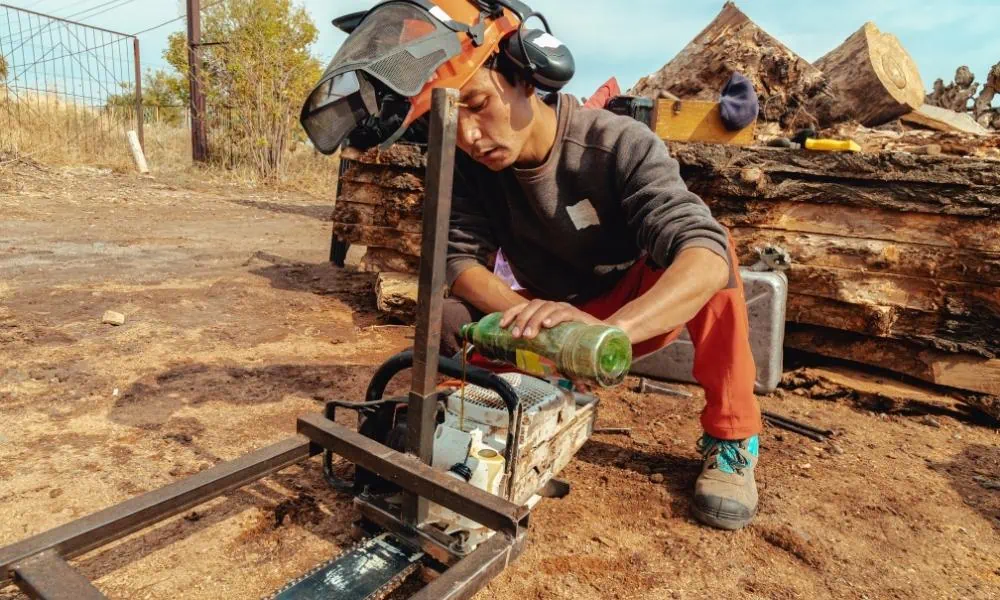
Remember that there are specific types of lubricants for every tool.
- Oil- Use oil for bearings, hinges, sharpening blades, and maintenance. Use this type of lubricant if you need to lubricate without resistance. There are different viscosities of oil, so use the right weight for your tool.
- Grease- If you need the lube to stay in the spot where you applied it, use grease. It is thicker than oil and more resistant. Use it for chains, linkages, bearings, and gears. When you have to store the tool for a long time, use grease to have that part lubricated and stop corrosion until you need to use the tool.
- Dry lubricant- If you want the parts to remain clean and free from dust and particles, the best one to use is dry lubricant. Use it for slide rails on miter saws, threaded rods, hinges, and locks.
Depending on its nature, you may drip, pour, spray, brush, or soak the parts with the lube.

3. Clean regularly.
Even power tools have protective housings; dust and dirt can get into internal parts. When dirt builds up, it can block filters or ventilation, bearings, switches, and brushes.
We need the parts moving in good condition with less friction as possible.
When dirt and dust accumulate on the ventilation holes, air flow reduces, resulting in reduced cooling capacity. This event happens because dirt and dust impede the operation of the tool.
For example, an angle grinder often accumulates metal shavings or concrete dust, resulting in clogging vents. This tool needs continuous airflow to work at optimal temperatures.
When blocked, the tool may not cool down during the cycle, resulting in excessive temperature and possible overheating.
They can happen if you are blocking the vents with your hands.
You can feel the heat from the casing when it is overheating. In this case, stop for a bit and clear the dust from the tool.

4. Use sharp blades and bits.
Dull blades and bits are notorious for damaging many power tool motors. They put the motor under stress because they cannot cut or bore holes efficiently, cleanly, and smoothly.
Dull blades or bits increase the material resistance, making it more challenging to penetrate.
With increased resistance, the motor increases friction and strain, causing it to generate more heat than usual.
If you notice your drill taking more time and pressure to drill holes, even for the light or soft materials, it’s probably time to sharpen the drill bits.
The same signs go for a blunt hole saw, except that the hole saw will have round teeth blades.
Do not wait for the drill to feel hot by trying or continuing to bore holes with this blade condition. There are different tools you can use to sharpen hole saws.
And like any cutting tool, be it a jigsaw, a grinder, a chainsaw, or a circular saw, you need their blades cutting efficiently.
Blunt blades do not only cause overheating, but they will have a higher risk of causing a kickback.
So, before using any tool, make sure the blades or bits are sharp.

5. Cool the tool down.
Turn the tool off to reduce and normalize the heat inside it. This action is your initial step when you notice signs of rising temperature.
You do not have to wait for the tool to get too hot. If you are working with your device for an extended time, give it a short time for breaks to cool. Do this when you use corded power tools.
Cordless power tools have control systems and sensors that regulate their internal temperature on the motherboards. But even with this technology, they can still overheat if used improperly.
For example, cordless drills overheat when you use them at the wrong angles and keep drilling without giving it time to cool down.
If you use improper or worn-out drill bits, cordless drills can overheat. If overheating is in any part of the temperature control system, the tool may get damaged permanently.
So, the best way to avoid this problem is to give your tool a break.
I find that when my cordless Makita circular saw overheats from ripping timber, the saw just turns off and will require the battery to do a new charge for the battery to work again.

6. Do not overload.
Going beyond the tool’s capacity will hurt it.
You cannot use a cordless drill not designed for drilling masonry. Going beyond its capacity is a shortcut to destroying your tool.
The same goes when you use a ⅜ impact wrench to unfasten 900 ft lbs nuts on a truck.
Always know your tool’s capacity. Check out the recommended settings of your tool from the manufacturer. And upgrade to an impact wrench when needed.
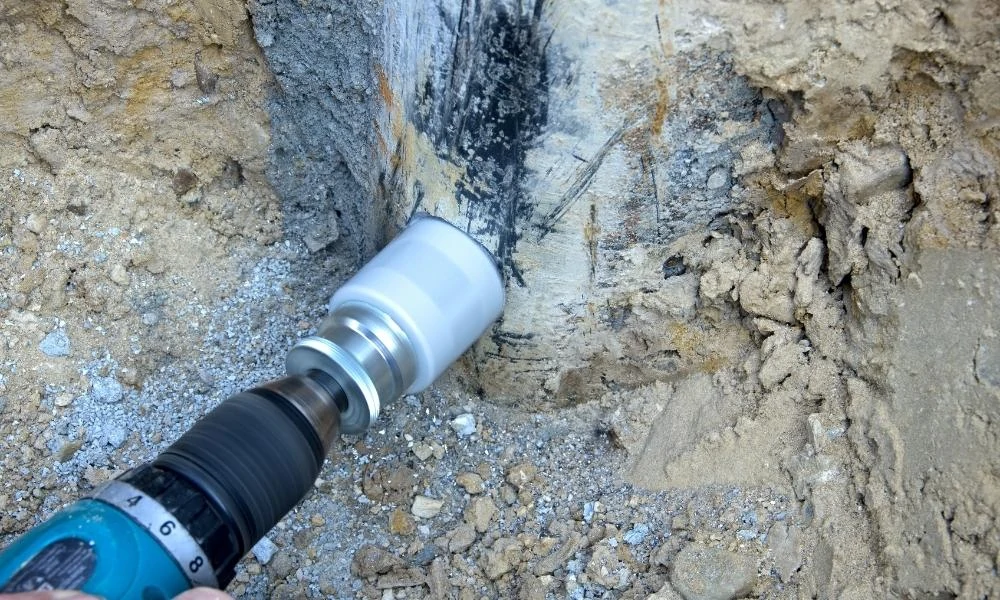
Always know your tool’s capacity. Check out the recommended settings of your tool from the manufacturer.
- Variable speed control
- Maximum torque settings
- Amperage and wattage ratings
- Voltage ratings for cordless tools
- Blade types
- Teeth per inch for saw
- Bits type
- Grinding disc types
- Feed rate and cutting speed
- Compressed air power
- Blade depth

7. Use the appropriate speed setting.
Most power tools have variable speed settings. They operate optimally using the correct speed settings.
The speed at which you cut or drill different materials varies. For instance, if you use a circular saw on wood, metal, or plastic, you must use different speed settings and blade materials.
The same goes for sanding tools. You should use a different speed setting for sanding abrasive concrete than you do for smoothened concrete. Other else, consider the sandpaper used.
You cannot apply the same RPM for an 80-grit sandpaper to a 60-grit sandpaper. The latter is much more coarse and may cause overloading.
We know that power tools make our jobs easier. But we should use them at their recommended speed to avoid damaging them or ourselves.

8. Store your tool properly.
Storing the tool properly maintains its optimal functionality.
Storing your power tools in a cool, dry place will keep its ventilation ports and air filters dust-free.
So when you are ready to use it again, its cooling system remains functional. The tool can dissipate heat, preventing its motor from overheating.
When storing cordless tools for a long time, remove their battery to maintain their integrity.
Lithium batteries should be stored at half charge, not full charge. Unlike older batteries that should be stored at full charge.
Check our recommended movable storage for power tools.

9. Replace worn-out or damaged parts.
Parts wear out over time. Brushes, bearings, or belts can wear out, leading to increased friction, motor strain, reduced cooling, and, eventually, overheating.
For these reasons, you must ensure the parts are in good condition.
A worn-out carbon brush reduces electrical contact and results in the drill’s poor performance. It can generate excess heat and sparks.
A lot of cordless drill overheats because of worn-out carbon brushes.
If you smell something burning when drilling, turn your tool off and bring it to a professional for proper diagnosis. You can buy new carbon brushes online from Amazon and install them yourself.
Replace the parts with constant contact with others to keep the tool in optimal condition.
Brushless tools dont need the brushes to be replaced.
10. Go cordless.
I always recommend using cordless power tools, not only for the convenience of using them un-tethered but also for protecting them from overheating.
Cordless power tools have temperature control systems and thermal sensors that send signals to regulate the temperature.
These sensors are placed strategically near heat-generating parts and send signals through the electrical control system.

When the temperature goes above the safe threshold, the control system may reduce power output or speed, giving time for the tool to cool down or activating cooling systems to help dissipate heat.
You may notice this because the performance will slow down. It’s a technology that protects your tool from heating excessively and possibly burning internal parts.
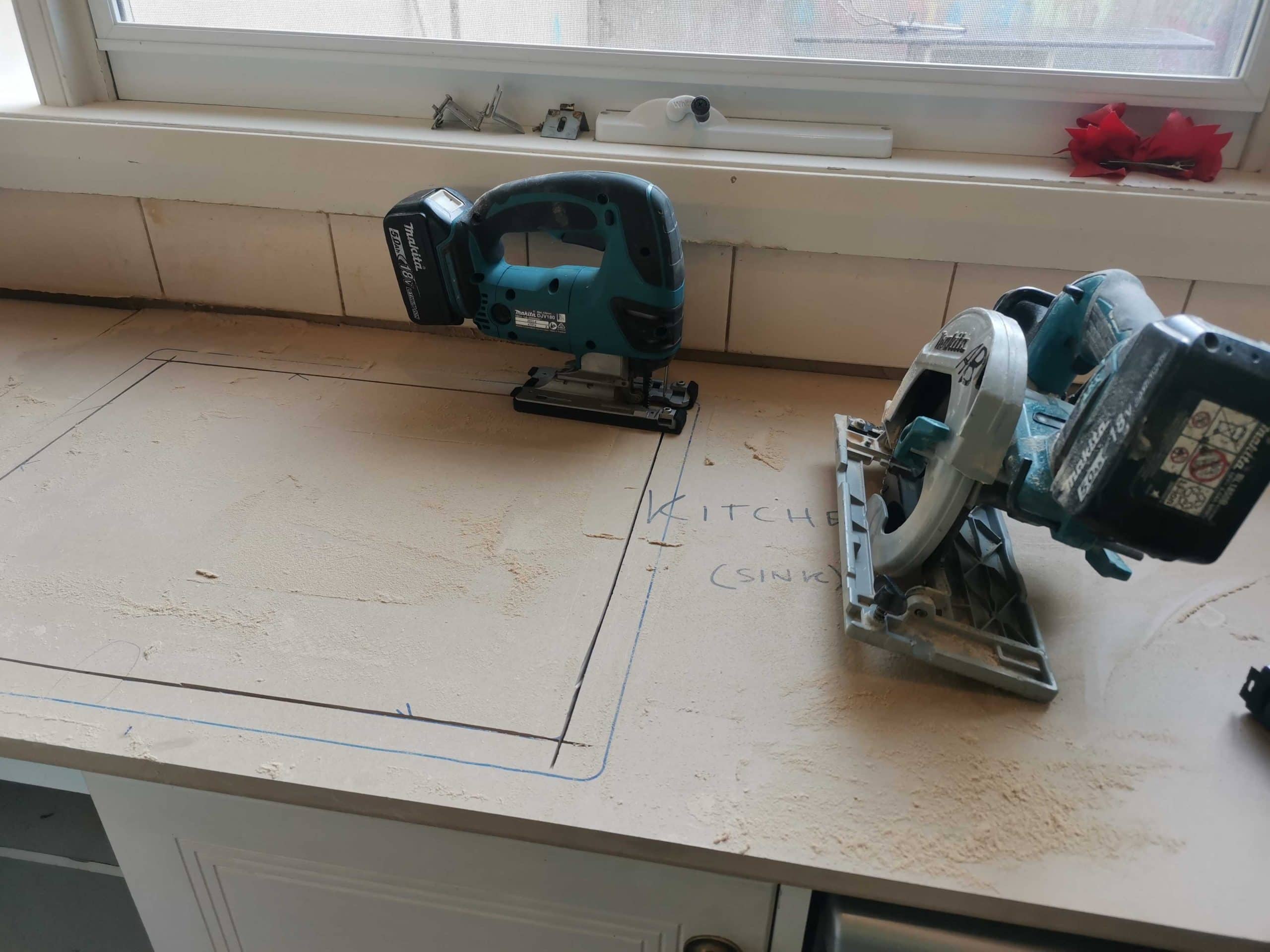
Protect your tool from overheating.
Preventing tools from overheating is not a short-term solution. It keeps your power tools in shape, increasing your tool’s longevity. Additionally, it does not only maintain the tool but protects its operators and keeps them safe.
Aside from that, your device remains efficient during operation if you keep its parts and accessories in optimal condition. It only takes a few protective measures to do this.
With these practices, you’ll have a reliable working machine that helps you become more productive and satisfied with your work.


