
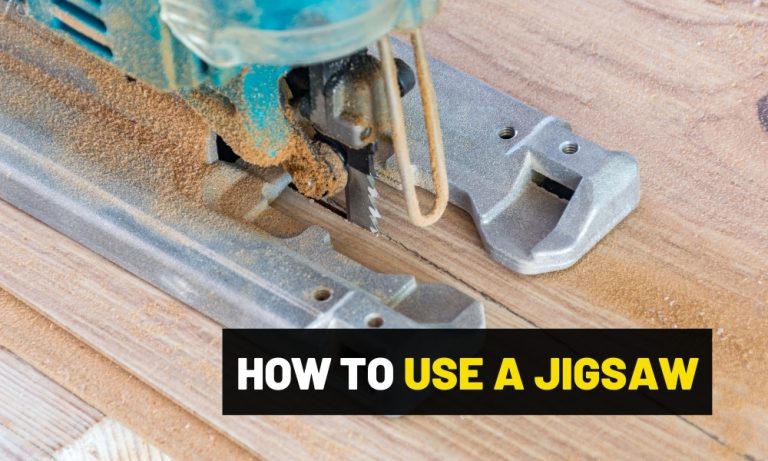
- What is a jigsaw tool used for?
- First, let’s understand the important jigsaw parts
- Jigsaw Types
- What materials and tools help when cutting with a jigsaw?
- How to choose the right blade?
- Tips for changing blades
- How to cut with a jigsaw?
- Tips for using a jigsaw for making various cuts
- Tips for switching or choosing speeds
- Do’s and don’ts when using a jigsaw
- How to work safely with a jigsaw?
- Be a master of your jigsaw.
Last updated on May 29, 2024 9:28 pm
What is a jigsaw tool used for?
According to Aaron Barnett of BangingToolbox: More than that genius killer puppet in the movies, a jigsaw is a powerful tool that allows you to cut intricate shapes on wood metal, or plastic sheet material while being able also to finish inside curves, and make short crosscuts.
This is made possible by the jigsaw’s long and thin reciprocating blade which makes it easier to steer in a curved motion during cuts, unlike most stationery or wide-bladed saws that would otherwise jamb.
This article will teach you what cuts you can make and how to use a jigsaw.

First, let’s understand the important jigsaw parts
Shoe. Also called the baseplate, the shoe provides a smooth contact surface between the tool and the material, allowing the saw to ride and trace along cutting lines. The shoe angle can also be adjusted to tilt the blade for bevel cuts.
Power control. Jigsaws are often armed with variable-speed triggers. The maximum speed of the motor is set using the variable speed dial. The trigger revs the motor, increasing the speed up to the set maximum strokes per minute (Stm) depending on what you are cutting and your applied pressure.
Blade. It sits square with the shoe by default and what does the cutting work for you. Jigsaw blades are long and thin with various types (TPI) for different materials. They’re interchangeable to suit cutting a wide range of materials with a different blade and for easy replacement. Some budget jigsaw tools do not include a quick-release blade change. Make sure to have a long-lasting durable quick-release system.
Motion switch. Sets the intensity of the pendulum motion of the blade during a cut. This adds a back and forth movement to the blade in addition to moving up and down, allowing for more aggressive cutting or smoother cuts when necessary.
Guide roller. Aside from keeping the blade steady during operation, it also contacts and pushes the blade to provide the pendulum motion. It’s located behind the blade and above the shoe.
Motor. This is the heart of the jigsaw. It provides the mechanical power that drives the cutting action of the tool and can be anywhere between 350 – 900 watts depending on the user’s application.
Handle. The handle provides an ergonomic and comfortable surface for you to properly hold and maneuver the tool. The type of handle defines the kind of jigsaw. More on that in a bit.
Blade changer. Holds the blade in position. Changing blades used to require loosening two screws with Allen keys. Nowadays, a lot of newer models have tool-less blade changers to make changing blades easy while remaining even more secure.
Cutting guide. Located in front of the blade, it assists the user in precisely following cutting lines.
Jigsaw Types
As stated before, the handle defines the kind of jigsaw and how they’re meant to be used. There are two categories of jigsaws:
D-handle
Top or d-handles make up the majority of jigsaws available we have found for DIY and building use. As the name suggests, the handle is located above the motor housing in the shape of a D.
A D handle provides a more comfortable grip for long work times. Having the handle above the blade also makes cutting thicker materials easier, but restricts visibility with the cutting blade.

Barrel grip
This type of jigsaw has its handle integrated with the motor housing. This gives users finer control for following intricate cuts and the ability to use the saw upside down or on angles more easily.
Most barrel grips even allow for two-handed operation. Keep in mind that having the handle near the motor makes it heat up after a while.

What materials and tools help when cutting with a jigsaw?
The electric jigsaw’s advantage of being highly maneuverable during cutting is also a disadvantage if you just want to make straight cuts. Use a straight edge or jigsaw guide to help you with straight cuts.
Also, a jigsaw is better used on thinner material, not really ideal if you want to process thicker hardwoods.
How to choose the right blade?
Wood and PVC
If you’re using a jigsaw to cut wood, use standard high carbon steel(HCS) blades for cutting most wood and PVC.
While these may dull quicker, they’re relatively inexpensive and are surprisingly flexible. High carbon steel blades also do well at scroll cutting.

Thick and thin metal
If you’re using a jigsaw to cut metal, high-speed steel(HSS) blades are more robust and excel at cutting non-ferrous metals and acrylics.
These blades have tougher edges and dull at a much slower rate, but the added rigidity also makes them more susceptible to blade breaks.
Laminate
You can use Bi-metal blades, if you’re using a jigsaw to cut laminate flooring. Because they combine the qualities of HCS and HSS, making them more flexible and durable.
They dull slowly and are less likely to break, though the added survivability also makes these an expensive option.
Ceramic tile
Use special toothless tungsten carbide blades or a diamond blade for cutting ceramic, porcelain, and even glass.
These are specially constructed blades meant to take on extremely hard materials and greatly reduce if not completely eliminate the risk of shattering workpieces.
Vinyl
Use finer-toothed HSC or carbide blades. Since vinyl is a brittle plastic polymer, blades designed for rough cutting or those with fewer teeth can end up shattering it.
MDF
MDF is like Weetbix and best cut using either an HCS blade [1] with high TPI (12-20) to avoid tearing or a standard HSS blade with 14-36 TPI.
So if you’re using a jigsaw to cut MDF, you’d want to go with a slower but cleaner cut to avoid chipping the rest of the MDF and so that the edges won’t be rough/abrasive
Tips for changing blades
Change blades when they wear out, break or bend, or if you’ll be cutting through an array of different materials. Aside from blade material, tooth count is also important as it will determine the speed and cleanliness of cuts.
Use a lower tooth count for softer materials (between 6-20 TPI) and use blades with 14-36 TPI for harder materials like hardwood, metal, and exotics.
How to cut with a jigsaw?
- Wear a mask and goggles to protect yourself from cutting dust.
- Read the user manual.
- Be aware of where the power cord is at all times.
- Check the condition of the blades. Old and dull blades may snap and cause injury.
- Do not adjust or change the blade while the jigsaw is still plugged in.
- Do not put any of your appendages near the cutting action while it’s still on.

Tips for using a jigsaw for making various cuts
Bevel cuts
The wonderful thing about a jigsaw is that you can easily take advantage of the adjustable shoe angle.
This tilts the whole jigsaw assembly once you lay the shoe flat on what you are cutting, allowing you to make various bevel cuts – either straight or curved.
Straight cuts
A jigsaw on its own isn’t known for being great in cutting long and straight lines. This is how to use a jigsaw to cut a straight line however: Use a guide like a straight edge or a piece of wood.
The sides should be smooth as possible and free from any bumps or warping. Use clamps to hold the guide tight so it doesn’t move around. Otherwise, a circular saw do better or a table saw.
Curves
Here’s how to use a jigsaw to cut curves:
Fully mark the cutting line and cut your curves outside the line to avoid any mistakes. Sand off any excess material until you have your desired curve cut finished. You may have to make relief cuts [2] to get your jigsaw through tight curves and prevent the blade from stopping.
Circles and holes
If you’ve read our previous guides, you’d know that using a jigsaw is the best way to cut circles in any material. So if you dont know how to use a jigsaw to cut a circle yet, make sure to completely mark the edges of your desired circle beforehand. Use a screw, a length of string, and a pencil to draw perfect circles on the surface of your workpiece.
Wood patterns and shapes
When it comes to intricate patterns and detailed shapes, it’s best to use a barrel grip.
Here’s how to do it if you’re using a jigsaw to cut shapes: Cut at a slow and steady pace, making sure that you closely follow the cutting line as much as you can. Sand off any excess material until the desired shape is achieved.
Squares
Here’s how to use jigsaw to cut a square: After fully marking out the square, start by drilling pilot holes at the four corners of the square. The holes should be large enough to fit the jigsaw blade.
Start cutting and refine as necessary until you have a first class square hole. Otherwise, here’s how you can cut square holes.
Cutouts from the middle
Using a jigsaw for plunge cutting is possible. Instead of drilling out many pilot holes is not necessary when cutting from the middle with a jigsaw.
Some jigsaws with a flat front end of the shoe allow you to angle the jigsaw to make plunge cuts into material that start far from the edge.
Here’s how to use a jigsaw to cut in the middle of wood otherwise, first you need to drill a small pilot hole to insert the blade before you start.

Tips for switching or choosing speeds
Use a slow speed for straight cuts to prevent the blade from pulling out of the cutting line. Curved cuts should be done at medium speed. Aside from the type of cut, consider the material too.
Softer wood should be cut at a higher speed [3] to reduce vibrations while hardwood, plastic, and metal should be cut at a low speed to reduce heat and prolong the blade’s life.
Do’s and don’ts when using a jigsaw
- Keep the shoe flat against the material at all times.
- Make sure that the blade is square with the shoe.
- Always use the right blade for the job.
- Always use guides for long, straight cuts.
- Adjust the speed of your jigsaw accordingly. Lower your speed when transitioning into curves.
- Don’t push too hard on the jigsaw as you move it forward. The movement should feel natural and with little resistance. Let the tool do the work.

How to work safely with a jigsaw?
- Wear a mask and goggles to protect yourself from cutting dust.
- Read the user manual.
- Be aware of where the power cord is at all times.
- Check the condition of the blades. Old and dull blades may snap and cause injury.
- Do not adjust or change the blade while the jigsaw is still plugged in.
- Do not put any of your appendages near the cutting action while it’s still on.
Be a master of your jigsaw.
A jigsaw is a handy and versatile tool that can cut and shape most materials with ease. They’re easy to learn and use, making them a great tool for DIYers and professionals alike.
Along with a circular saw, having a jigsaw in your workshop will do wonders for any project. If your keen on getting started and want to make the cut, then it’s time to get jiggy with it and grab yourself one of these saws!

More information:
- Choosing blades, published https://www.woodmagazine.com/tool-reviews/jigsaws/choosing-jigsaw-blades
- Jigsaw essentials: How to get the most out of your jigsaw, published on https://www.familyhandyman.com/list/jigsaw-tips-and-essentials/
- Make cleaner jigsaw cuts, published on https://www.woodmagazine.com/woodworking-tips/techniques/sawing-solutions/jigsaw


