

Last updated on March 23, 2026 3:25 am
Wonder if you can use angle grinder on your workpiece?
Aaron Barnett of BangingToolbox recommends: If there’s any tool that’s versatile enough to do a variety of DIY tasks, that would be an angle grinder, as you can use an angle grinder for cutting, buffing, polishing, grinding, and more.
All of this is possible because you can change the discs for different surfaces and types of metals and jobs.
So if you have decided that it is time to – finally own an angle grinder, you should know which disc to use and the proper application.
No worries if you don’t know yet. We made this easy for you to – find the right disc for your angle grinder job.

1. Grinding Wheels
The grinding wheel is a thicker version of a cut-off disk and the most commonly-used angle grinder disc.
Also called a grit disc, it boasts a coarse surface rated into grits.
These ribbed edges are designed to remove excess rough metal on edges or surfaces.
A lower grit rating is more coarse, while a higher one means less coarse for touch-ups.
Low-grit grinding discs take off materials faster than high-grit ones. However, the disk produces more sparks and leaves a rougher finish.

Where to use?
- Remove rough and excess metal on surfaces
- Clean cuts
- Prepare metal surfaces for welding tasks
- Smoothen a fresh weld
- Sharpen tools
- Deburr sharp edges
Safety Precautions
Grinding disks create a lot of hot sparks. Make sure that the safety guards are installed and working. Other than that, protect your eyes, ears, and hands.
The sparks can go in any direction. So, you might as well wear long sleeves. The blades don’t really heat up because of the abrasive material that wears down instead of overheating.
Slower grinding extends blade life.
Still, refrain from touching blades after using the tool in case they are hot.
2. Cut-off disc
Cut-off wheels are a thinner version of grinding discs when it comes to appearance. However, a thinner profile may also have tapered edges that can help you slice through forged metal.
Cut-off disks have a different level of danger when working, as a thinner blade cuts faster and is more brittle. You will need a thicker cut-off disc for cutting denser metals.
Again don’t force the blade down, as it will wear the abrasive wheel too quickly. Let the tool do the metal cutting job, and just hold the angle grinder nice and steady to work.

Where to use a cut-off disc?
Cut-off discs are used for cutting various metal pieces, including metal tubes, threaded rods, reinforcing steel, and steel plates.
You can also cut embedded bolts down with a cut-off disc. Meanwhile, do not use an angle grinder for cutting a metal roof.
Use a nibbler for metal sheets.
Safety precautions for a cut-off disc
A cut-off disc is more prone to warping, breaking, and shattering. The thin cutting disc can shatter in any direction.
Do not add pressure or cut too fast when using a cut-off wheel on the metal stock. Doing this makes the blade unstable.
Instead, use a thicker cut-off wheel if you need to and wear protective gear like goggles when working with a cutting disc.
3. Flap Disc
The flap disc got her name from overlapping abrasive disc sheets.
Although it works similarly to a grinding disc, the main job is to sand down and smoothen metal surfaces to a finer finish, usually after initially removing excess metal on the surface with a grinding disc.
A flappy disc is mostly used in fabrication, auto-body shops, and metalworking.
And a flap disc is more advisable to use for fine grinding tasks that a regular grinding attachment cannot do.

Where to use a flap disc?
- Remove scratches and marks.
- Remove rust.
- Remove metal burrs.
- Chamfer edges.
- Remove imperfections during the fabrication of the metal.
- Take off paint & scale.
Safety precautions for a flap disc
A flap disc tends to heat up. Wear appropriate gear, and don’t forget to put on the safety guard.
Place the grinder in a direction where it can drive the sparks away from the lower center of your body.
Move it in a way where it will not hinder your control of the tool.
If your flap disc has been dropped or damaged, replace the disk and dispose of the old one properly. A damaged flap disc could break and shatter while being used.
4.Wire Brush Disc
A wire wheel is distinctive for having intertwined wire bristles protruding from the circular wheelbase.
The wire brush wheel could have different styles, but it is mainly used for removing paint and rust.
The thicker bristles are more abrasive than thinner bunches of bristles.

Where to use a wire wheel?
- Remove rust and paint.
- Polish hard metal.
- Clean surfaces.
- Remove stains.
Safety precautions on using a wire wheel
Use a superior quality wire wheel. The wire bristles degrade easily, as they are used for abrasive jobs.
They may snap off from the bunch, break free, and fly off while using.
You don’t want the bristles to fly into your eyes. Make sure you are wearing safety goggles at all times.
5. Polishing Disc
A polishing pad, also called a buffing pad, is a disc that helps you achieve that polished and shiny look like mine.
Polishing wheels have different buffing compounds, materials, and shapes to help you achieve a distinctive shine.
If you want to polish the body of your car, use a polishing pad made of wool.

Where to use polishing pads?
As the name implies, the wheel is used for polishing tasks.
Meanwhile, you can also use an orbital palm sander for this job.
Usage precautions
Not all angle grinders work with a polishing wheel attachment. Make sure it has speed options for polishing.
You need an angle grinder that allows you to turn and control the wheels slowly.
A high-speed tool or a fast variable speed setting may damage the surface instead of polishing.
6. Diamond disc
A diamond disc is one of the toughest and sharpest blades on our list of grinding disks.
Made with diamond grits on the edges of the blade, the disc makes a perfect cutting blade for hard-to-cut materials like stone and masonry.
With a higher cutting speed, the blade is more durable and won’t shatter like an abrasive wheel.
Take note that a diamond disk cannot cut metal. They grin

Where to use a diamond disc?
- Wet and dry concrete cutting.
- Cut rocks, stones, marbles, and granites.
- Cut tiles.
- Cut extra-dense materials.
Safety precautions for diamond discs
Do not use this cutting disc for grinding, although you can do a small amount of deburring.
The blade can burn you when turned on, so ensure the safety guard is in place and wear protective gear.
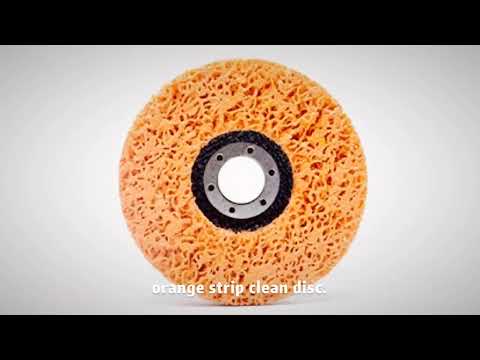
7. Strip Disc
When removing paint with a wire wheel, you may damage the material underneath the paint.
To avoid that kind of damage, you can use a stripping disc.
This disc is made of a poly-fiber material that will not scratch the material behind the paint.
Where to use a strip disc?
- Remove paint & coatings.
- Remove epoxy & glue.
- Best for removing coatings on wood and fiberglass.
- Remove stains and residue.
Safety precautions when using a stripping disc
Although we can consider this disc less harmful than the previous types on your weatherboards, and trim the angle grinder still creates a rotating action that may injure your hands.
Make sure to wear gloves and safety goggles.
This precaution protects your hands and eyes from chipped paint, adhesives, or coatings.
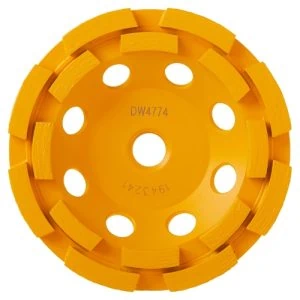
8. Concrete grinding disc
A concrete grinding disc removes excess and grinds down concrete on the surface.
Solid and compact materials bonded together by resin, fiberglass, metal, or vitrified material make up this grinding wheel.
This composition creates an abrasive stone that can remove or polish concrete.
This grinding disc is durable and will last a long time, so have one handy.
Where to use a concrete grinding disc?
- Concrete surfaces.
- Masonry, stone, granite, or marble.
Safety precautions when using a concrete grinding disc
Aside from wearing your protective gear, use the right side of the stone to take the speed of your angle grinder.
9. Ceramic sanding disc
A ceramic sanding disc can do the jobs that most flap discs can.
What we love about ceramic sanding discs is that it has fewer risks of overheating than grinding disc.
A quality ceramic sanding disc offers more durability and reliability. And it works on metal and ceramics.
Check this list of sanders for specific sanding tasks.

Where to use a ceramic sanding disc?
- Sand down scratches and markings.
- Sand rust off.
- Remove metal burrs.
- Chamfer edges.
- Take off paint & scale.
Safety precautions on the ceramic sanding disc
A ceramic sanding disc is resistant to heat and moisture, unlike a flap disc. But it doesn’t mean you won’t put your safety guard on.
Also, wear your gloves and safety goggles to protect your eyes from flying particles.
10. Wood-cutting disc
We have mentioned discs for hard materials like metal, concrete, and masonry.
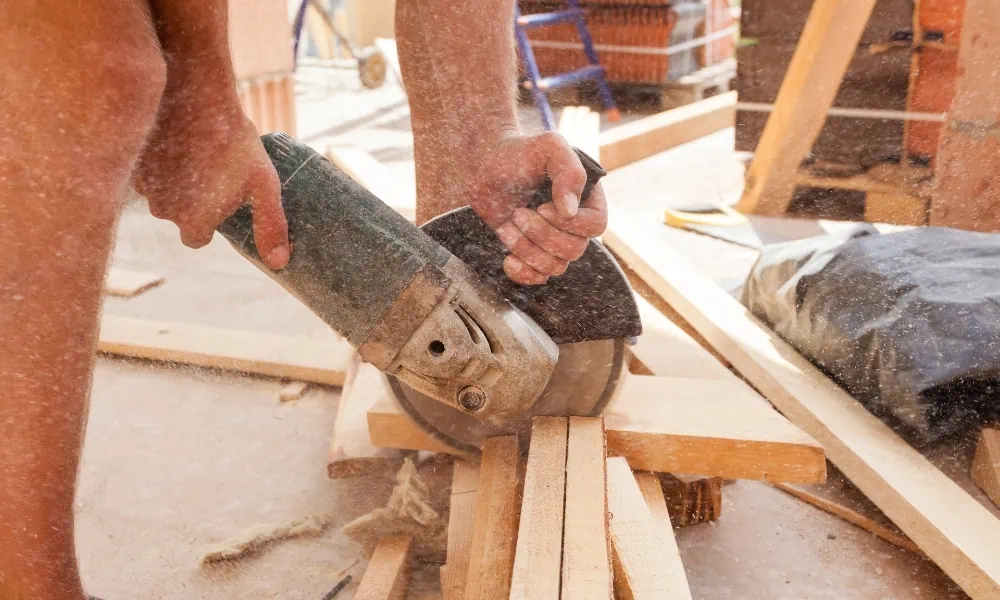
Using an angle grinder to cut wood seems unusual. However, there is an appropriate angle grinder disc type for cutting wood and for grinding wood!
Wood-cutting discs have teeth, much like a mini-version of a circular saw blade. With a tungsten carbide tip that helps make clean cuts into the wood.
Where to use a wood-cutting disc?
A wood-cutting disc should be able to slice in any type of wood: oak, mahogany, oak, pine, walnut, and more.
Safety precautions when working with a wood-cutting disc
Make sure you put extra precautions for wood dust aside from adjusting your safeguard in place. Don’t forget to protect your eyes.
11. Wood-grinding disc
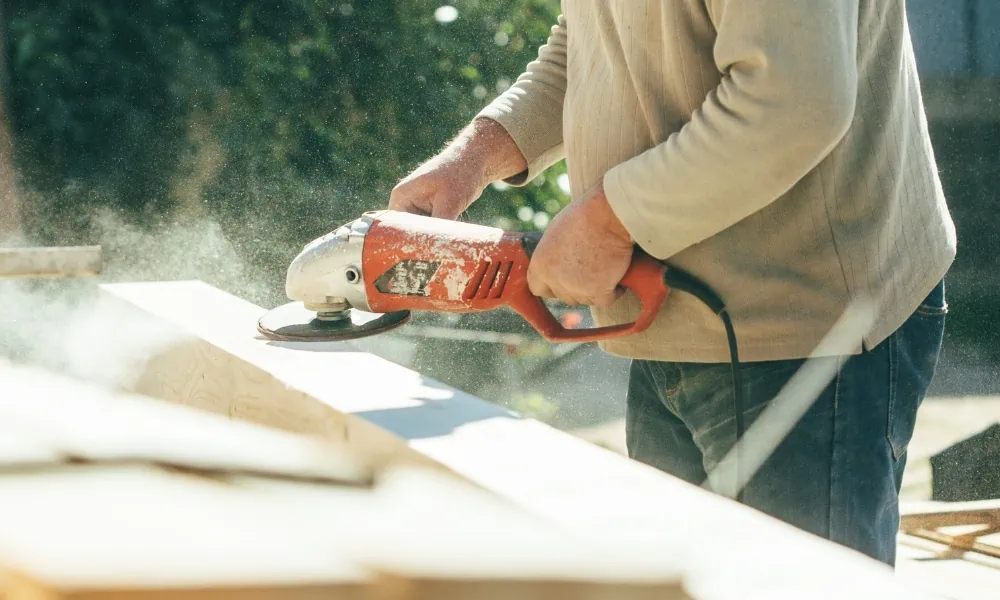
Wood grinding disks are an underused disk attachment for angle grinders.
With one, you can quickly grind down timber for landscaping or wood scalping projects.
Where to use a wood-grinding disc?
- Smoothing sharp edges on landscaping timbers After using an electric planer like the corners of planter boxes.
- Sculpting wood art.
- Hollowing out timber.
- Rustic furniture-making.
Safety precautions on a wood-grinding disc
As always, wrap up and cover what you need to protect when operating with a serious piece of hardware
12. Wood-carving Disc
A wood-carving disc has a curved surface that resembles a donut. And has lots of carbide teeth on the surface.
These teeth are responsible for carving the wood.
A wood-carving disc requires a slower speed and lower angle control for more precise shaping.
When working with a wood-carving angle grinder blade, you must choose a finer tooth for detailed carving work or coarse teeth for rough shaping.

Where to use a wood-carving disc?
- Rough shaping.
- Sculpting.
- Hollowing out.
- Furniture-making.
- Making signs.
Safety precautions when using wood-carving disc
A slower speed is enough not only to control the tool but also to work safely.
The angle grinder is fast enough to remove a lot of wood from the surface.
It’s difficult to control a high-speed angle grinder, and it could result in kickback or disc skipping.
To wrap it up
Angle grinders are versatile tools that you can use for different tasks and on different materials.
You can use different angle grinder disc types for sanding, grinding, polishing, and cutting. The tool is so flexible, as you can use different disc attachments to perform specific jobs on various surfaces.
Now you know which wheel attachment you can use for your project, check my favorite corded angle grinders for added power.
For added portability, check these lightweight yet powerful cordless angle grinders.


